24/7 Professional Alarm Monitoring for Your Home
When something happens at your home, an alarm alone isn't enough. You need a trained professional to respond, verify what's happening, and dispatch help. Day or night. Every day of the year. That's what 24/7 monitoring actually means.
It's 2:14 AM. Your alarm just went off.
You're asleep. Your family is asleep. Maybe you're not even home, traveling for work or away on vacation. The sensors caught something. The siren is sounding. Now what?
Without monitoring, your alarm is just noise. Loud noise, sure, but noise. Whether anyone responds depends entirely on whether someone hears it and decides to do something about it. With professional monitoring, the moment the alarm triggers, a trained specialist sees the signal, picks up the phone, and takes action on your behalf. Even if you don't know it's happening yet, help is already on the way.
That's the real difference between a system that records what happened and a system that does something about it. Real people. Real response. Around the clock.
Want to add 24/7 monitoring to your home?
We'll walk through what monitoring covers, what the response process looks like, and which option fits your home. Free consultation, no pressure.
What Actually Happens When Your Alarm Goes Off
Most homeowners have no idea what really happens when their alarm triggers. The process is faster and more deliberate than most people imagine. Here's the typical sequence.
Our advisor's take
The two-call protocol (call you first, then dispatch) does two important things at once. It catches false alarms before emergency services are called, which avoids fines and waste. And it makes sure real alarms get real response, fast.
Alarm triggers.
A door opens, a window slides, glass breaks, motion is detected, or smoke is sensed. If it's a normal entry, you have a brief entry delay (typically 30 to 60 seconds) to disarm the system. If the system isn't disarmed, the panel sends an instant signal to the monitoring center over cellular, with internet as a backup.
A specialist sees the signal.
A trained monitoring specialist receives the alert at the monitoring center within seconds. They see exactly which sensor triggered, where in your home, and the type of event — burglar alarm, fire, medical, and more.
They call you first.
The specialist calls the primary phone number on file. If you answer, they ask for your authentication password to confirm everything is okay. If it's a false alarm — kids, pets, accidental trip — you cancel it with the password. No dispatch, no fines.
If they can't reach you, they dispatch.
If you don't answer, give the wrong password, or sound distressed, the specialist immediately dispatches the appropriate emergency service: police for burglary, fire department for smoke or CO, medical for panic alarms.
They stay on the line.
If you're home during an emergency, the specialist stays connected, guides you through the next steps, and continues coordinating with first responders until you're safe.
Professional Monitoring vs Self-Monitoring
Self-monitored systems send alerts directly to your phone, leaving you responsible for calling 911 yourself. Professionally monitored systems route the alert through a trained center that handles the response for you. Both have a place. Here's the honest comparison.
You get the alert on your phone. You decide what to do.
Works well when:
- You always have your phone on
- You can act quickly when needed
- You want to keep monthly costs to a minimum
The gap:
A trained specialist sees every alarm and responds 24/7.
Works well when:
- You travel or sleep at night (everyone does)
- You want a real human verifying alarms
- You want fire, CO, and medical events also handled
The trade-off:
Our advisor's take
For most American homeowners, professional monitoring is worth the monthly cost. Not because self-monitoring is bad, but because life gets in the way. Phones go on silent. Batteries die. Sleep happens. A monitoring center is the part of the system that never sleeps, never misses, and never has to decide whether tonight's alarm is real.
Wondering which monitoring option fits your home?
Our advisors walk you through the choices honestly, no pressure to upgrade. Real conversation, real recommendations.
What Professional Monitoring Actually Covers
Monitoring isn't just for burglary alarms. A complete monitoring service watches over multiple kinds of events, any of which can be the one that matters most on any given day.
Intrusion Alarms
Door, window, motion, and glass break sensors. The classic burglary alarm response.
Fire and Smoke Detection
Connected smoke detectors send alarms to the monitoring center, which dispatches the fire department even if you're not home. Faster response means less damage.
Carbon Monoxide (CO) Detection
CO is a silent killer. Connected CO detectors alert the monitoring center so help arrives even if you've lost consciousness.
Water Leak and Freeze Events
A burst pipe can cause thousands of dollars in damage in just minutes. Monitored water sensors send alerts so you can shut off the water or get help fast.
Medical Alerts and Panic Buttons
Many systems include a panic feature that lets you call for medical help with one button. Especially valuable for older homeowners or anyone with a medical condition.
Video Verification (with some providers)
Some monitoring services can review video from your cameras when an alarm is triggered, confirming whether it's a real event before dispatching. Availability varies by provider.
Response Time and Reliability That Matters
When you're shopping for monitoring, three things determine real-world reliability.
Response Time
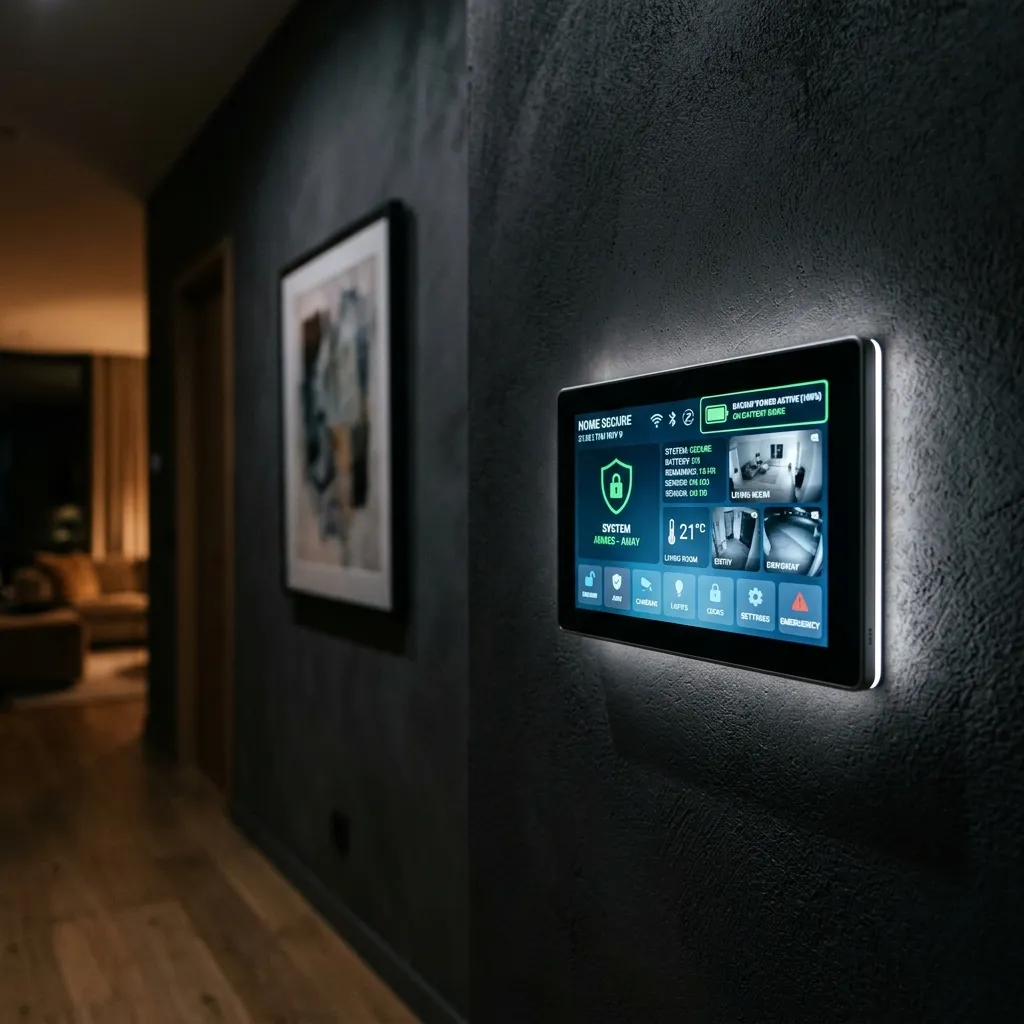
Most professional monitoring centers aim for under 30 seconds from the alarm signal to the first call to your phone. The faster the response, the smaller the window for an intruder to act and the faster emergency services get to your home.
Redundant Centers
Top-tier monitoring providers operate multiple geographically separated centers, so if one center loses power or connection, others take over without missing an alarm. This is the difference between a monitoring service that works on a normal Tuesday and one that works during a regional storm or natural disaster.
Cellular Backup and Certifications
Your panel should connect to the monitoring center over cellular (not just Wi-Fi), so the signal goes through even if home internet or power is down. The monitoring center itself should be certified by The Monitoring Association and listed by Underwriters Laboratories.
What Homeowners Are Saying
"[INSERT REAL TESTIMONIAL — monitoring center responded to a real alarm, 2-3 sentences from a real customer.]"
— [First Name] [Last Initial], [City, State]
"[INSERT REAL TESTIMONIAL — fire or CO alarm caught by monitoring while homeowner was away or asleep.]"
— [First Name] [Last Initial], [City, State]
"[INSERT REAL TESTIMONIAL — false alarm cancelled cleanly via two-call protocol, or peace of mind while traveling.]"
— [First Name] [Last Initial], [City, State]
Why Homeowners Choose Home Secure Connect
We don't push one monitoring plan. We don't have a quota to hit. That's exactly why homeowners trust us to find the right option.
Get a Free QuoteHonest Plan Comparison
Monitoring plans range from basic to comprehensive. We walk you through what each tier actually includes and recommend the right one for your home.
Vetted Monitoring Providers
We only work with monitoring centers that meet real industry standards: redundant locations, fast response, and trained operators. We help homeowners across all 50 states.
One Connected System
Your monitoring service is integrated with your sensors, cameras, and smart devices from day one. Everything works together, no manual setup.
Real People When You Need Us
If you have questions, want to add a phone number, or update your authentication password, a real advisor walks you through it.
Frequently Asked Questions
Within seconds of the alarm triggering, your panel sends a signal to the monitoring center. A trained specialist sees the alert, calls the primary phone number on file, and asks for your authentication password. If you confirm a false alarm, no dispatch happens. If you can't be reached or sound distressed, the specialist immediately dispatches the appropriate emergency service: police for burglary, fire department for smoke, medical for panic alarms.
For most American homeowners, yes. Self-monitoring is fine if your phone is always on, you're always able to respond, and you only want intrusion alerts. But life gets in the way. Phones go on silent. Batteries die. Sleep happens. Travel happens. A monitoring center is the part of the system that never sleeps. For fire, CO, water leaks, and medical events, the speed of professional response can mean the difference between a small problem and a disaster.
Most monitoring centers use a two-call verification protocol specifically to catch false alarms. The specialist calls you first, asks for your authentication password, and cancels the dispatch if everything is okay. This prevents the false alarm fees that many cities now charge for repeat unverified dispatches. The protocol typically resolves false alarms in under a minute.
Response time is one of the most important things to ask about when comparing monitoring options. The fastest monitoring centers aim to act on alarm signals within seconds, with verified alarms like fire or panic often getting the fastest priority. We walk through specific response time commitments with you during the free consultation.
Only with your permission, and only when relevant to an alarm event. Reputable monitoring services don't watch live camera feeds for surveillance. Higher-tier plans may include video verification, where a specialist can review a short clip from the moment of an alarm to confirm what triggered it. You control which cameras are connected to monitoring and which are not.
Yes, monitoring is a service that can usually be cancelled, though specific terms vary by provider and contract. Some providers offer month-to-month monitoring with no long-term commitment. Others offer lower rates with longer contracts. We walk through the specific terms with you before you commit, so there are no surprises down the road.
Get the Right 24/7 Monitoring for Your Home
Talk to a real advisor about the right monitoring service for your home and family. We compare options across our vetted network and recommend what actually fits your needs and budget. No pressure. No fees.
Mon to Sun, 8am to 8pm