Smart Water Leak Detection and Freeze Sensors for Your Home
Water damage happens slowly, quietly, and usually while no one is watching. A small drip becomes a $15,000 claim. A frozen pipe becomes a ruined floor. Smart sensors and automatic shutoff valves catch leaks the moment they start, alert you instantly, and can shut off the water before damage spreads.
Important Notice About Water Leak Protection
Smart water leak sensors and automatic shutoff valves significantly reduce the risk and severity of water damage, but they do not guarantee that water damage will not occur. Performance depends on proper installation, sensor placement, working batteries, water pressure conditions, and the specific provider. Insurance discounts mentioned on this page vary by carrier and state and are not guaranteed; contact your insurance provider for specific details. Home Secure Connect is an independent advisor; we do not provide monitoring services or installation services directly and are not responsible for the performance of provider equipment or services.
The leak you'll never see is the one that does the most damage.
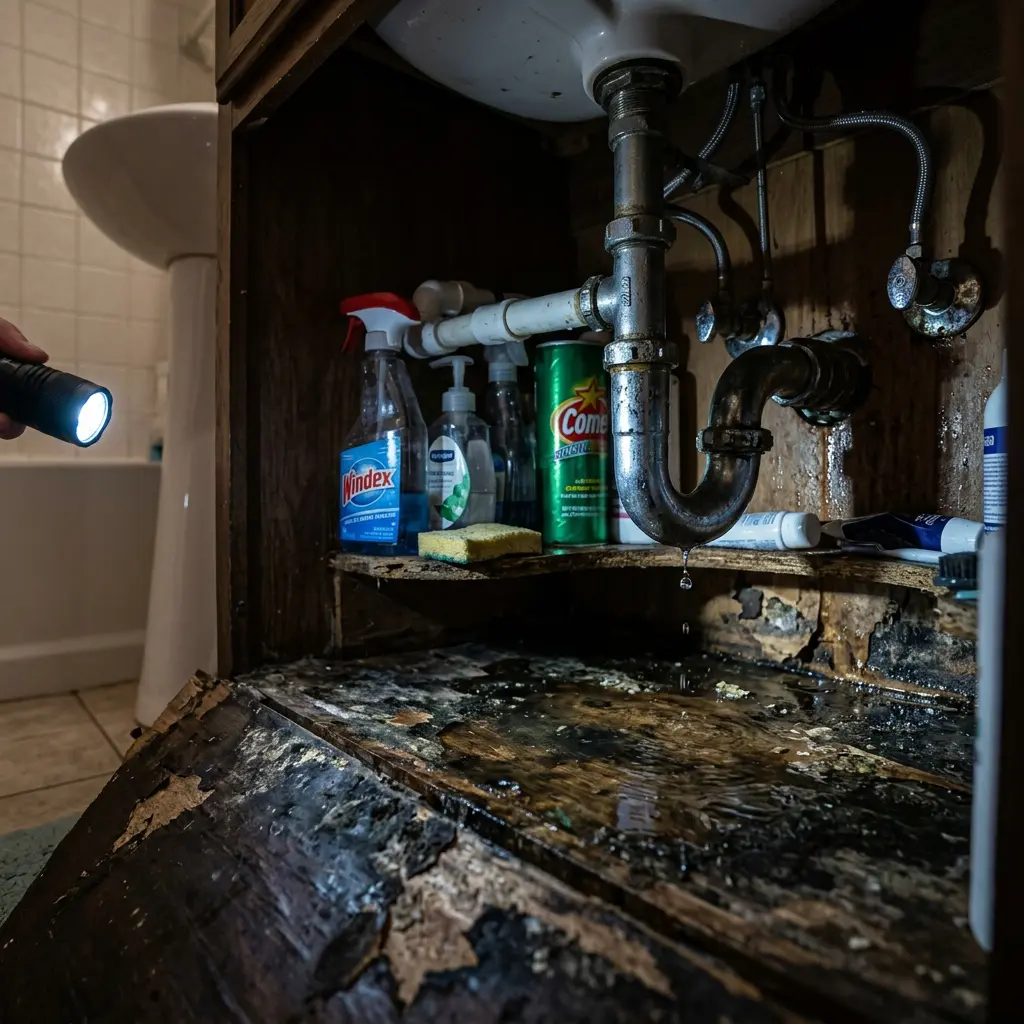
Most homeowners imagine water damage as something dramatic — a pipe burst, a flooded basement, water pouring out of the ceiling. Those happen. But the bigger problem is the slow leak: the pinhole drip under the sink, the seeping connection behind the washing machine, the slow seepage in the basement. Hidden leaks can run for hours or days before anyone notices. By the time someone does, the floor is soaked, the drywall is ruined, mold has started, and the repair bill has crossed into five figures.
According to the Insurance Information Institute (III), an industry research organization, about 1 in 60 insured homes files a property damage claim for water damage or freezing each year. The average claim runs into thousands of dollars. Some run far higher. And many of these incidents would have been caught early by an inexpensive sensor or stopped entirely by an automatic shutoff valve.
Two Layers of Water Protection
Modern smart water protection comes in two complementary forms. Most homeowners benefit from at least the first option. Many add the second for stronger protection and potential insurance savings.
Spot Sensors
Small wireless sensors placed in high-risk spots around your home.
How they work:
- Detect water on the floor by direct contact
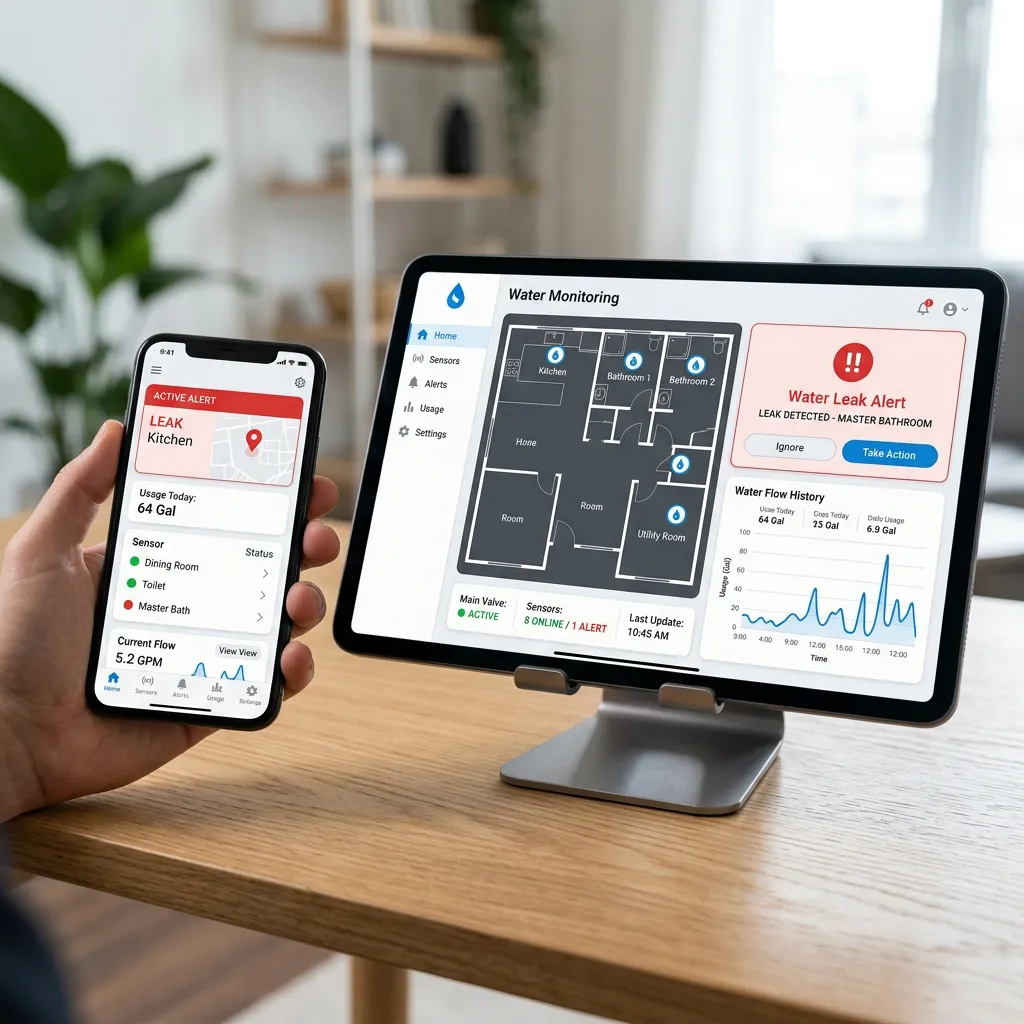
- Send instant alert to your phone and the monitoring center
- Battery-powered, no wiring required
- Battery life of several years on a single charge
Best for: Catching leaks in specific risk areas: under sinks, behind toilets, near appliances.
Whole-Home Protection
A smart shutoff valve installed inline on your main water supply by a plumber.
How it works:
- Monitors water flow, pressure, and temperature 24/7
- Detects tiny drip leaks (as low as 0.1 gallons per minute)
- Can shut off water automatically when a leak is detected
- Can be remotely controlled via the app
Best for: Whole-home protection, including hidden leaks behind walls and pinhole drips that no individual sensor can detect.
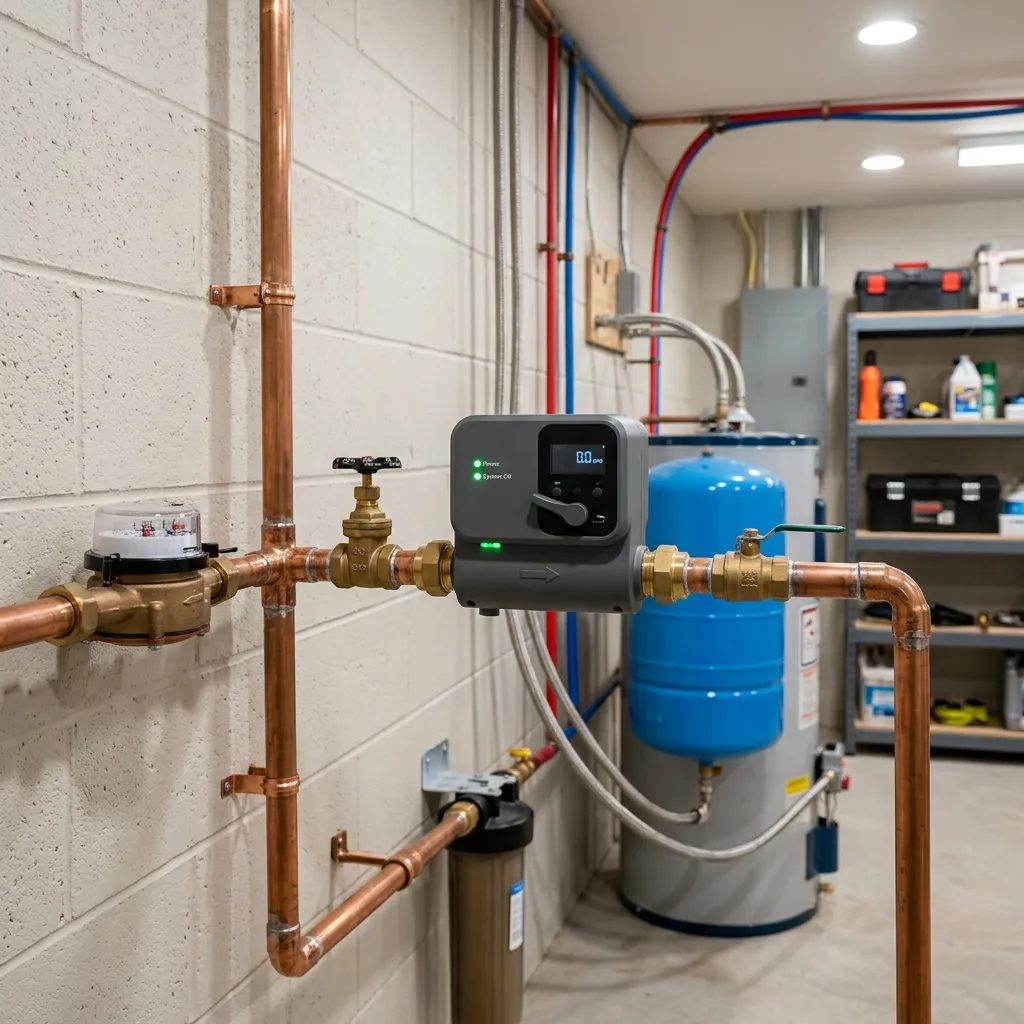
How shutoff valves are configured: Most smart shutoff valves can be set to either alert-only mode (notifies you and the monitoring center, but you decide whether to shut off the water) or automatic shutoff mode (stops the water flow immediately when a leak is detected). The right setting depends on your household, your travel patterns, and the type of leaks you're most worried about. Our advisors walk through this during installation.
Our advisor's take
For most homes, starting with spot sensors in high-risk areas (under sinks, near washing machines, near water heaters) is the most cost-effective first step. Adding a smart shutoff valve is the next big upgrade, especially for homes with older plumbing, finished basements, or anyone who travels often. The combination of both layers provides the most complete protection and is what we typically recommend during our free consultation.
Where Leaks Actually Happen in American Homes
The high-risk spots are remarkably consistent across most homes. If you place sensors in these spots, you catch the majority of common leak sources.
Washing machine hoses.
One of the most common sources of major water damage. Rubber hoses degrade over time and can burst suddenly, dumping gallons of water in minutes. A sensor on the laundry room floor catches this immediately.
Under kitchen and bathroom sinks.
Slow drips from supply lines or drain pipes accumulate inside the cabinet for days before water shows up on the floor. A sensor inside the cabinet catches the leak the moment it starts.
Behind toilets.
Wax ring seals fail. Supply lines develop pinhole leaks. Most homeowners don't notice until water has soaked into the floor or seeped through to the ceiling below.
Around water heaters.
Water heaters fail more often than homeowners expect, usually with a slow leak from the bottom of the tank before a full failure. A sensor placed on the pan or floor catches this early.
Basement floors and sump pump areas.
Sump pump failures during storms, foundation leaks, and basement seepage all show up as standing water on the floor. A sensor here is essential for any home with a finished basement.
Near dishwashers and refrigerator ice makers.
Appliance water connections are a common silent leak source. The leak builds slowly behind or under the appliance and damages the floor before becoming visible.
Freeze Detection: The Winter Threat
Frozen pipes are one of the most expensive forms of water damage. A small section of pipe freezes, the ice expands, the pipe splits, and when the ice thaws, hundreds of gallons of water flow through the break before anyone notices.
Modern freeze sensors (sometimes called frozen pipe detectors) catch this risk before damage starts. They detect when indoor temperatures drop to risky levels (typically 40 to 45 degrees Fahrenheit), well before pipes actually freeze. The sensor sends an alert to your phone and to the monitoring center, giving you time to act: turn up the heat, open cabinet doors so warm air reaches the pipes, drip the faucets, or call someone to check on the home if you're traveling. Some smart shutoff valves include freeze monitoring built in, so the system can automatically shut off the water if temperatures get dangerously low while you're away.
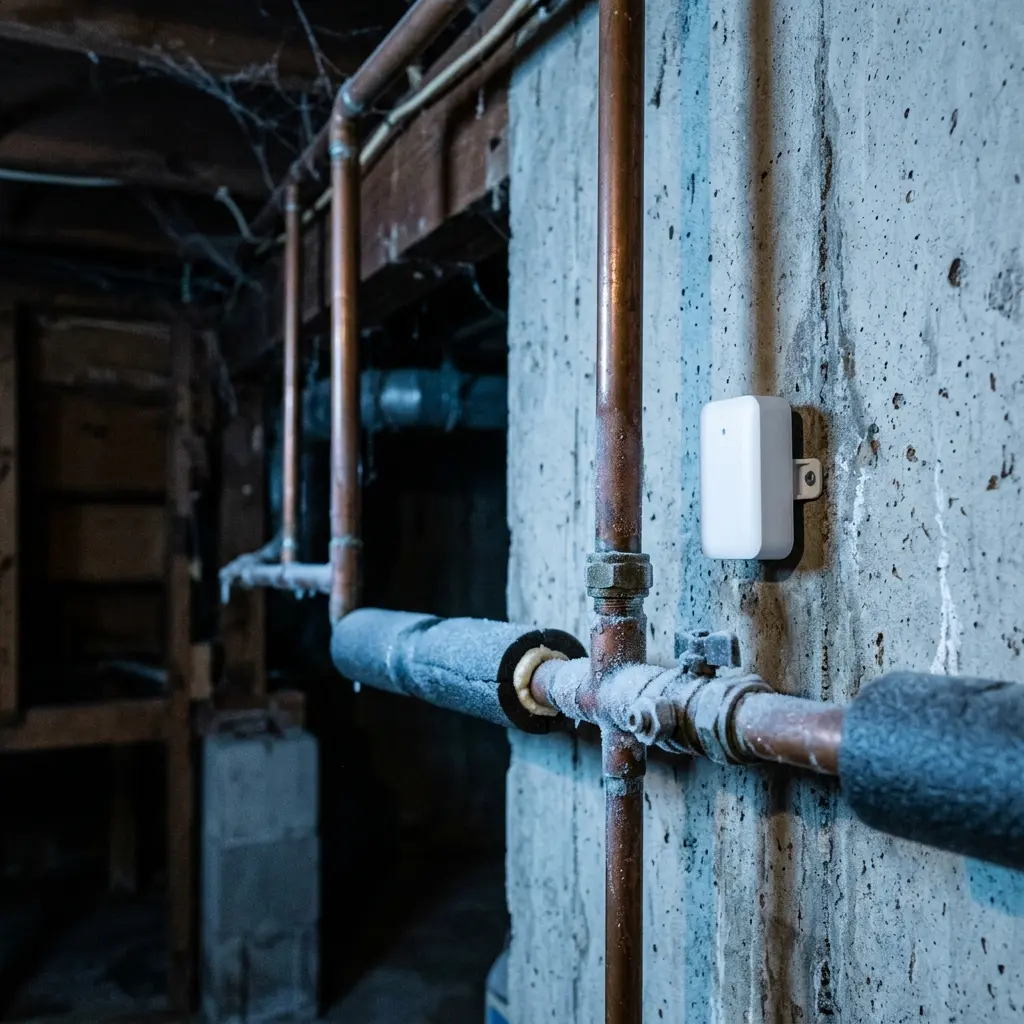
Why freeze detection matters most for these homes:
- Vacation and second homes that sit empty during winter
- Homes with pipes in unheated areas (basements, garages, attics, crawl spaces)
- Older homes with pipes that run along exterior walls
- Homes in northern climates with extended winter cold
- Anyone who travels during winter and leaves the home empty for more than a few days
Insurance Discounts for Smart Water Protection
Many homeowners insurance carriers offer premium discounts for homes with monitored water shutoff systems. The reasoning is simple: insurance companies pay billions in water damage claims each year, and a system that catches leaks early or shuts off water automatically dramatically reduces the size of those claims.
Discount amounts vary by carrier, state, and the specific system installed, but homeowners often see meaningful reductions on their annual premium. Some carriers also reduce deductibles or offer dedicated water damage coverage upgrades for homes with smart shutoff systems. For many homeowners, the insurance savings alone offset a significant portion of the cost of installing the system.
Our advisor's take
Before your installation date, call your homeowners insurance carrier and ask specifically about discounts for monitored water leak detection and automatic shutoff valves. Get the answer in writing if possible. The discount, combined with the actual damage prevention value, often makes this one of the highest-ROI additions to a home security system. Discounts are not guaranteed and vary by carrier, state, and system type.
Where to Place Water Leak Sensors
| Location | Why It Matters |
|---|---|
| Under kitchen sink | Catches supply line leaks and drain leaks before water damages the cabinet or floor below. |
| Behind washing machine | Catches hose failures, which are one of the most common major leak sources. |
| Near water heater | Catches slow leaks from the bottom of the tank, which usually precede a full failure. |
| Behind toilets | Catches wax ring failures and supply line drips before water seeps into the floor. |
| Basement floor | Catches sump pump failures, foundation leaks, and seepage during storms. |
| Near dishwasher | Catches supply line drips and pump seal failures that damage the floor underneath. |
| Freeze sensor: unheated areas | Garages, attics, basements, and rooms with pipes along exterior walls. Best placed near actual pipes. |
What Homeowners Are Saying
★★★★★
"[INSERT REAL TESTIMONIAL — water leak sensor catching a washing machine or sink leak while away.]"
— [First Name] [Last Initial], [City, State]
★★★★★
"[INSERT REAL TESTIMONIAL — smart shutoff valve preventing major water damage or insurance claim avoided.]"
— [First Name] [Last Initial], [City, State]
★★★★★
"[INSERT REAL TESTIMONIAL — freeze sensor protecting a vacation home or pipes during winter travel.]"
— [First Name] [Last Initial], [City, State]
Why Choose Home Secure Connect
We help you find the right sensors and shutoff valves, coordinate professional installation, and connect everything to 24/7 monitoring.
Get a Free QuoteRight Sensor Placement
Sensor placement matters as much as having sensors at all. Our advisors walk through your home and identify the specific spots where leaks are most likely to start.
Plumber-Coordinated Install
Smart shutoff valves require licensed plumber installation. We coordinate the work with our provider partners and licensed plumbers in your area, so you don't have to manage multiple contractors.
Integrated with Monitoring
Water sensors and shutoff valves integrate with the 24/7 monitoring center. Alerts go to your phone, and the system can shut off water automatically even when no one is home.
Insurance Documentation Help
We can provide installation documentation and equipment details your insurance carrier may need to verify your system and process any available discount.
Frequently Asked Questions
Yes, when properly placed. Water leak sensors are simple, reliable devices that detect water on the floor by direct contact. The moment water touches the sensor, it triggers an alarm and sends a notification to your phone and the monitoring center. They don't prevent leaks, but they catch them within seconds, which is the difference between a quick towel cleanup and a $15,000 insurance claim. Placement matters most — the right spots are under sinks, behind appliances, and near water heaters.
A leak sensor detects water that has already started leaking, then alerts you so you can act. A smart shutoff valve monitors the water flow on your main supply line continuously and can shut off the water automatically when it detects an abnormality. Sensors catch leaks where they happen. Shutoff valves can catch hidden leaks behind walls or under floors that no individual sensor can detect, and they can stop the water automatically even if no one is home. Most smart shutoff valves can be configured to alert-only mode or automatic shutoff mode, depending on your preference. Most homeowners benefit from both layers working together.
Probably not as urgently, but it depends on your specific home. Even in mild climates, occasional cold snaps can freeze pipes in unheated areas (garages, attics, crawl spaces, exterior wall runs). Freeze sensors are most valuable for homes that sit empty during winter (vacation homes, snowbirds traveling south), homes with pipes in vulnerable spots, and anyone in regions where winter cold is common. For mild-climate homeowners, focus on leak sensors first.
Many homeowners insurance carriers offer discounts for monitored water leak detection and automatic shutoff systems. The specific discount varies by carrier, state, and the system installed, and is not guaranteed. Some carriers offer 5 to 15 percent off the annual premium; others offer reduced deductibles or improved coverage terms. Before installation, call your insurance carrier and ask specifically about discounts for these systems. Get the answer in writing if possible.
Place sensors in spots where leaks are most likely to start: under kitchen and bathroom sinks (inside the cabinet), behind toilets, near washing machines, around water heaters, near dishwashers and refrigerator ice maker connections, and on basement floors near sump pumps or in finished basement areas. Most single-family homes benefit from 5 to 8 sensors covering the highest-risk spots.
Yes. Smart shutoff valves are installed inline on your main water supply, which requires cutting into the water line and proper sealing. Licensed plumber installation also protects any warranty on the device and any insurance discount tied to a professionally installed system. We coordinate with licensed plumbers in your area as part of the installation process, so you don't have to manage multiple contractors.
Protect Your Home From Water Damage
Talk to a real advisor about the right water leak and freeze protection for your home. We walk through your layout, your appliances, and your insurance situation, then recommend the right combination of sensors and smart shutoff valves. Professional install. No pressure. No fees.
Or call (855) 248-8052. Mon to Sun, 10am to 8pm.