Smart Thermostats for Real Energy Savings and Year-Round Comfort
Walk into a perfectly comfortable home every time you arrive. Drop the temperature automatically when no one's there. Catch problems with your HVAC before they get expensive. Plus all of it connected to your security system in one app.
Your thermostat is making decisions for you every day. The question is whether it's making good ones.
Most homes still use thermostats that haven't changed much in 40 years. You set a temperature. The system runs to hit it. Whether you're home or not. Whether anyone's awake or not. Whether it's mild outside or freezing. It's a blunt tool, and it costs you money every month you keep it.
A smart thermostat does what a regular thermostat can't. It learns your schedule. It knows when you've left for work. It adjusts itself when the weather changes outside. It catches HVAC problems before they turn into emergencies. And when it's connected to your home security system, it becomes part of something bigger than just a temperature control.
What a Smart Thermostat Actually Does
Beyond letting you adjust the temperature from your phone, modern smart thermostats handle several jobs that change how your home runs day to day.
Five Things It Does Every Day
Learns your schedule.
After watching how you actually use your home for a week or two, the thermostat builds an automatic schedule that matches when you wake, leave, return, and sleep. No more programming a weekly schedule by hand.
Knows when you're gone.
Through geofencing on your phone or occupancy sensors in the home, the thermostat detects when the house is empty and automatically adjusts to an energy-saving temperature. When you start heading home, it warms or cools back to your preferred setting so you arrive comfortable.
Reacts to outside weather.
Many smart thermostats check the outdoor forecast and adjust how aggressively your HVAC runs. A cold front coming in? It pre-heats before temperatures drop. A heat wave? It pre-cools during off-peak hours when electricity costs less in some markets.
Watches your HVAC system.
Modern smart thermostats track how long your system runs, how quickly it reaches set temperatures, and how often it cycles. When something starts going wrong (a struggling compressor, a clogged filter, a refrigerant issue), the thermostat catches the change and alerts you before a small problem becomes an expensive repair. For example, if your air conditioner suddenly takes 25 percent longer than usual to reach the set temperature, the thermostat notices the change and flags it — often weeks before a full breakdown leaves you without cooling on the hottest day of the year.
Shows you where the money goes.
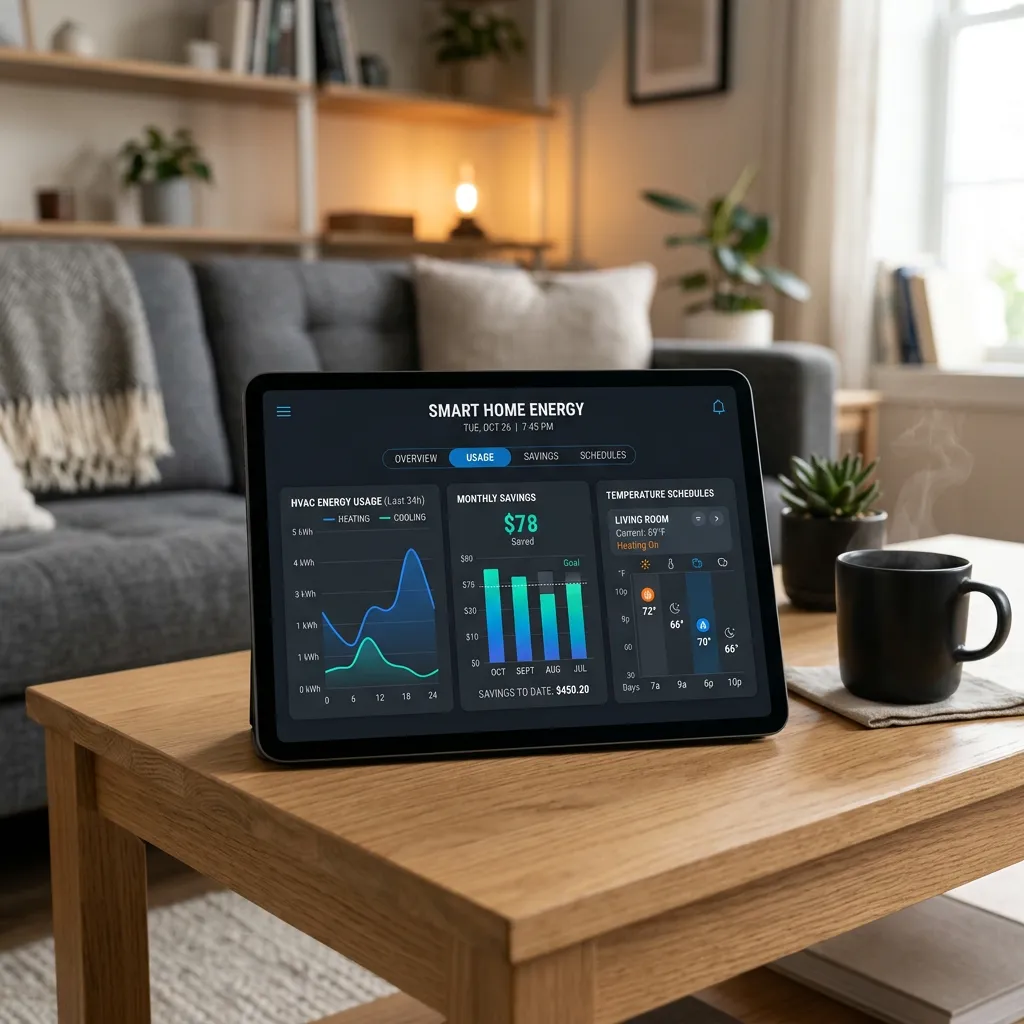
Monthly energy reports break down where your heating and cooling spending actually happens. Which days cost the most. Which times of day. Where there might be opportunities to cut without sacrificing comfort.
Real Energy Savings: What the Data Actually Says
Smart thermostat marketing is full of dramatic savings claims. The reality is more grounded and still worth it for most homeowners.
What the US Department of Energy actually says:
Setting your thermostat back 7 to 10 degrees Fahrenheit for 8 hours a day (during sleep or when no one is home) can save up to 10 percent annually on heating and cooling costs. A smart thermostat handles those setbacks automatically, without you having to remember.
Actual savings vary based on your climate, your insulation, your HVAC system, and how you currently use your existing thermostat. Homeowners who already manually set back their thermostat during the day or at night will see smaller percentage gains. Homeowners who run a constant temperature 24/7 will see the largest improvements.
One signal of verified savings: look for Energy Star certification. Energy Star certified smart thermostats have been independently tested to deliver real, measurable energy savings. Manufacturer claims of 20 to 23 percent savings are not always backed by independent testing, so we recommend focusing on Energy Star certified models when comparing options.
Utility rebates can offset the cost.
Many utility companies offer rebates ranging from $50 to $100 or more for installing Energy Star certified smart thermostats. Some utilities have additional rebates for participating in demand-response programs (allowing the utility to make small temperature adjustments during peak hours). Rebates vary by utility, state, and program — ask your advisor about specific rebates available in your area during the free consultation.
The C-Wire Problem: Why Installation Matters
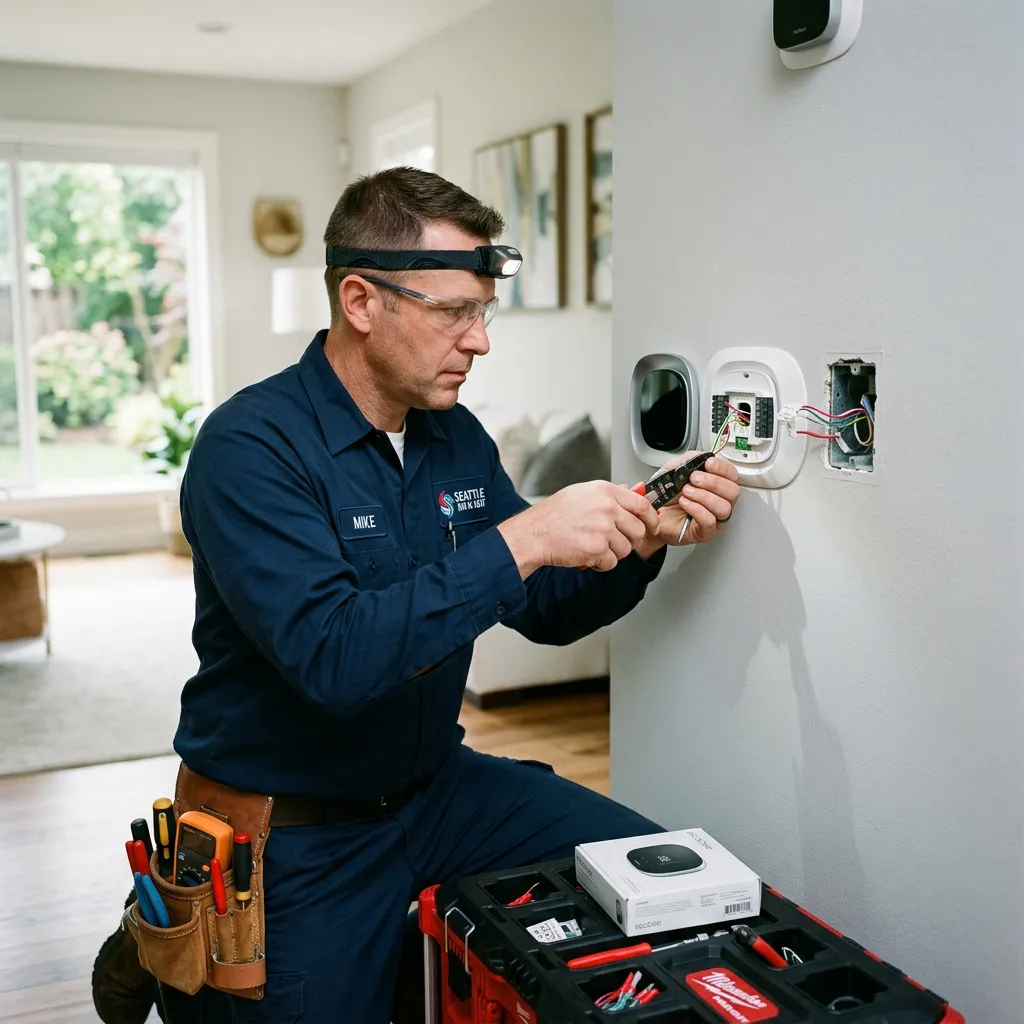
Most smart thermostats need a constant low-voltage power source called a C-wire (common wire) to run their Wi-Fi, screen, and sensors. Many homes built before about 2000 don't have a C-wire at the thermostat location, which is the single most common reason smart thermostat installations fail.
The C-wire issue can usually be solved, but solutions vary. Some smart thermostats include a power extender kit that adds a C-wire connection at your HVAC unit. Some models are designed to work without a C-wire at all, drawing power differently. Some HVAC systems (particularly older heat pumps and dual-fuel systems) have additional compatibility requirements beyond just the C-wire.
Our advisor's take
We see this all the time: a homeowner buys a smart thermostat online, opens the box, and discovers they don't have a C-wire. Either they return it, install it incorrectly and it doesn't work properly, or they hire a professional anyway. Professional smart thermostat installation handles the C-wire question upfront, confirms compatibility with your specific HVAC system (including heat pumps and dual-fuel systems), and gets everything working correctly on day one.
Smart Thermostat with Security System: When the Sum Is Bigger
A smart thermostat by itself is a useful device. A smart thermostat connected to your security system is part of something more powerful.
When the smoke alarm goes off, the HVAC can shut down.
An HVAC system running during a fire spreads smoke and gives the fire more oxygen. Connected systems can automatically shut off the air handler when smoke is detected.
When a freeze sensor warns, the thermostat can respond.
If you're away and the temperature is dropping toward dangerous levels, your security system can trigger the thermostat to pre-heat automatically, protecting your pipes before damage happens.
When you arm your system in 'away' mode, the thermostat follows.
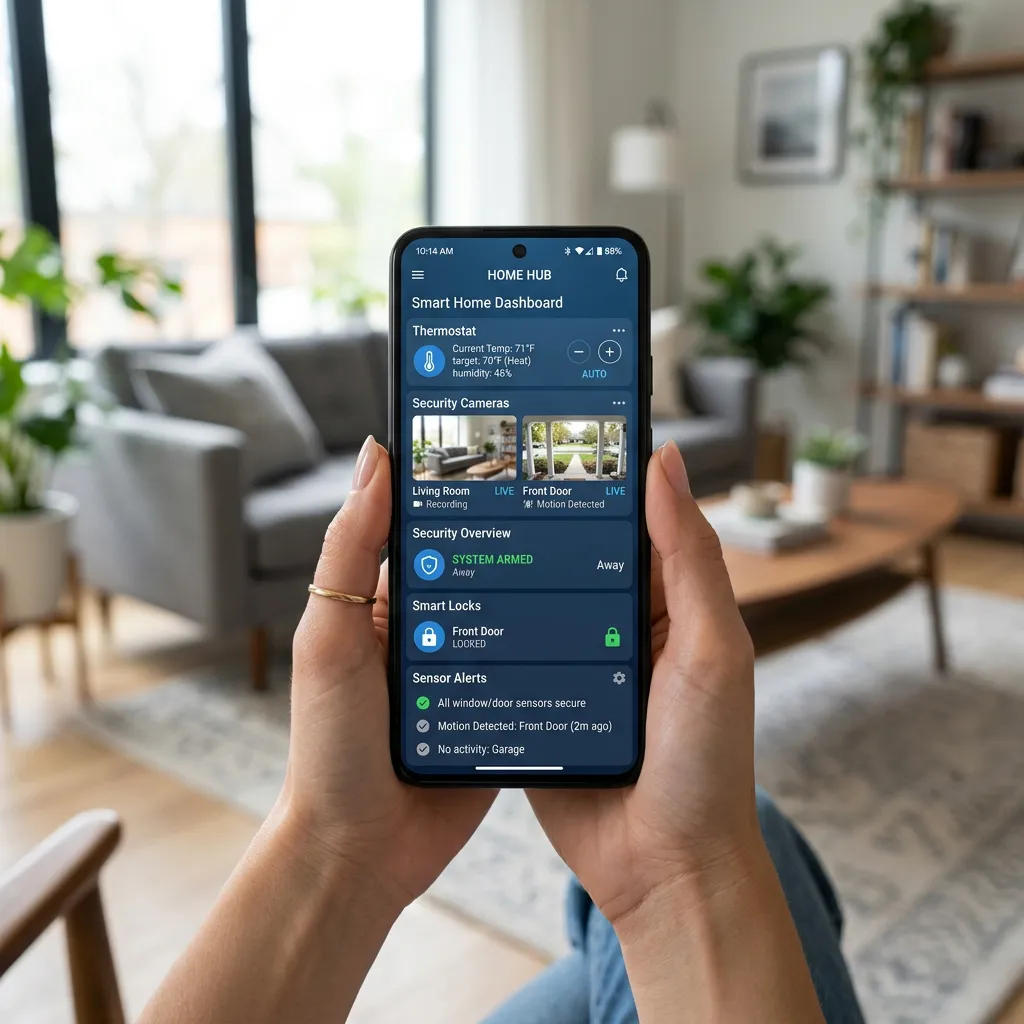
Arming the security system signals the thermostat to switch to an energy-saving setpoint. Disarming triggers it to return to your comfort setting.
One app for everything.
Your thermostat, sensors, cameras, locks, and monitoring all live in one app. Not five separate logins and three different vendors to call when something goes wrong.
What Homeowners Are Saying
★★★★★
"[INSERT REAL TESTIMONIAL — measurable energy savings, monthly bill reduction.]"
— [First Name] [Last Initial], [City, State]
★★★★★
"[INSERT REAL TESTIMONIAL — coming home to comfortable temperature, professional install experience.]"
— [First Name] [Last Initial], [City, State]
★★★★★
"[INSERT REAL TESTIMONIAL — integration with security system or HVAC issue caught early.]"
— [First Name] [Last Initial], [City, State]
Why Choose Home Secure Connect
We help you find the right thermostat, confirm compatibility, and get it installed correctly the first time.
Get a Free QuoteHVAC Compatibility Check
Not every smart thermostat works with every HVAC system. We confirm compatibility with your specific setup (including heat pumps, dual-fuel systems, and older systems) before recommending a model.
C-Wire and Install Done Right
The most common reason DIY thermostat installs fail is the C-wire issue. Our technicians handle C-wire installation, power extender kits, and any wiring upgrades needed for older homes.
Connected to Your Whole System
Your thermostat works with your sensors, cameras, locks, and monitoring through one app. Automation between devices happens out of the box.
Real People When You Need Us
Searching for smart thermostat installation near me? We help homeowners across all 50 states find the right model and the right installer. Setup questions, schedule changes, or HVAC issues the thermostat is reporting — a real advisor walks you through it.
Frequently Asked Questions
Yes, for most American homeowners. According to the US Department of Energy, setting your thermostat back 7 to 10 degrees for 8 hours a day can save up to 10 percent annually on heating and cooling costs. A smart thermostat handles those setbacks automatically. Actual savings depend on your climate, your insulation, your HVAC system, and how you currently use your existing thermostat. Homes that already run efficient schedules will see smaller gains. Homes that run constant temperatures 24/7 will see the largest improvements. Energy Star certified models have been independently tested to deliver verified savings.
For most homeowners, yes. The combination of energy savings, daily convenience (no more programming a weekly schedule by hand), HVAC monitoring, and remote control delivers ongoing value. The energy savings alone often pay back the cost of the thermostat within a couple of years. The convenience and HVAC protection are bonuses on top. Homeowners with very small or very efficient homes may see smaller savings. Homeowners who travel often or work outside the home see the largest improvements.
A smart thermostat connects to your home Wi-Fi and uses sensors, geofencing on your phone, and learning algorithms to manage your heating and cooling automatically. It learns when you wake, when you leave, when you return, and when you sleep. It uses occupancy sensors to know when the home is empty. It checks the outdoor weather forecast and adjusts how aggressively your HVAC runs. And it gives you remote control through an app on your phone, so you can adjust settings from anywhere.
Sometimes, but it depends on the specific model and your HVAC system. Some smart thermostats are specifically designed to work without a C-wire by drawing power differently. Others include a power extender kit that adds a C-wire connection at your HVAC unit. Some require a C-wire and won't work reliably without one. Older homes (built before about 2000) often don't have a C-wire, which is the single most common reason DIY smart thermostat installs fail. Our technicians handle this during professional installation.
Most modern smart thermostats support heat pumps, but compatibility varies by model. Heat pumps have specific wiring needs, particularly for auxiliary heat and emergency heat modes, that not every smart thermostat handles correctly. Dual-fuel systems (heat pump plus gas furnace) have even more specific requirements. We verify heat pump compatibility before installation so you don't end up with a thermostat that runs your system inefficiently.
Installation costs vary by the specific model, your existing thermostat wiring, and any additional work needed (C-wire installation, system compatibility adjustments, integration with your security system). A simple replacement on a home with existing C-wire is straightforward. Homes that need C-wire installation or extender kits take longer. We provide specific costs during the free consultation based on your exact HVAC setup.
There's no universal smart thermostat energy savings calculator that gives a precise number, but you can estimate. The US Department of Energy figure is up to 10 percent annually on heating and cooling, which on a typical home spending $1,500 to $2,500 per year on HVAC works out to roughly $150 to $250 in annual savings. Homes in extreme climates (very cold winters or very hot summers) often see higher savings. Homes that already use efficient schedules see smaller percentage gains. Add in possible utility rebates of $50 to $100 and the payback period for a typical smart thermostat is usually a couple of years. We walk through your specific situation during the free consultation and give you a realistic estimate based on your climate, HVAC system, and current usage.
Older homes have two specific challenges: they often lack a C-wire, and their HVAC systems may be older or non-standard. The best models for older homes are ones specifically designed to handle these challenges, with optional power extender kits and broader HVAC compatibility. Our advisors look at your home, your HVAC system, and your wiring during the free consultation, then recommend the model that actually fits rather than the most-advertised one.
Ready for Real Energy Savings and Year-Round Comfort?
Talk to a real advisor about the right smart thermostat for your home and HVAC system. We confirm compatibility, handle the C-wire question, and integrate everything with your security system. Professional install. No pressure. No fees.
Or call (855) 248-8052. Mon to Sun, 10am to 8pm.