Monitored Smoke and Carbon Monoxide Detectors for Your Home
Most home fires happen at night. Carbon monoxide can't be seen, smelled, or tasted. Some emergencies don't give you a chance to save yourself. Monitored smoke and CO detectors are the part of your home that responds for you, even when you can't.
Important Notice About Life-Safety Equipment
Monitored smoke and CO detection is not a guarantee of fire department response. Response times, dispatch availability, and service performance depend on the specific provider, your local emergency services, and conditions at the time of an event. Detector performance also depends on proper installation, working batteries, and unobstructed sensors. Home Secure Connect is an independent advisor; we do not provide monitoring services directly and are not responsible for the performance of provider services. We strongly recommend that homeowners also maintain standalone (non-monitored) smoke and CO alarms as a backup, in line with local fire code requirements.
Some threats don't wait for you to notice.
A kitchen fire while you're asleep upstairs. A faulty furnace releasing carbon monoxide overnight. A small electrical short in the basement that smolders for hours before anyone smells it. These aren't the dramatic emergencies people imagine. They're quieter, slower, and far more common.
Standalone smoke alarms catch them, but only if you're there to hear. Monitored smoke and carbon monoxide detectors do something more. They alert the monitoring center too, which dispatches the fire department on your behalf, whether you're home, asleep, away on vacation, or unable to respond. That's the difference between a device that wakes you up and a device that saves your home.
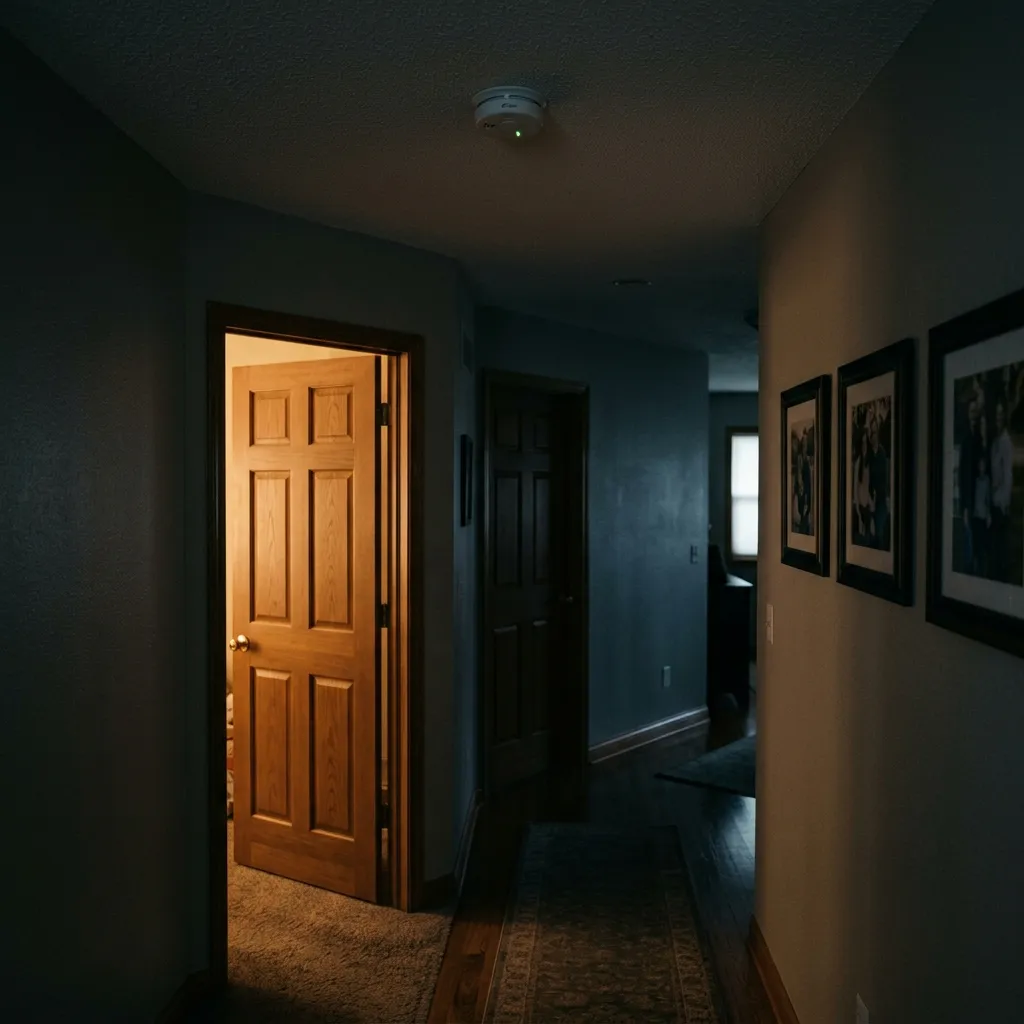
Why a Monitored Fire Alarm System Beats Standalone Detectors
A standalone smoke alarm from the hardware store is better than nothing. It will sound loud when smoke is detected. But it can only protect the people who hear it.
A monitored smoke and CO detector does everything a standalone does, then does more. When it detects smoke or carbon monoxide, it sounds the local alarm immediately. At the same time, it sends a signal to the 24/7 monitoring center, which calls the fire department to your address even if no one in the house can call for help.
Why the Difference Matters
Fires that start while you're sleeping.
According to the National Fire Protection Association (NFPA), about 3 in 5 home fire deaths occur in homes with no smoke alarms or no working alarms. Many of these happen overnight. A monitored system calls for help even if you sleep through the alarm.
Fires when you're away from home.
A vacation, a workday, a quick errand. If a fire starts and only a local alarm sounds, the fire grows until a neighbor notices smoke. Monitored detectors trigger dispatch immediately, dramatically reducing damage.
Carbon monoxide poisoning while unconscious.
CO can incapacitate someone before they're aware of the symptoms. The Centers for Disease Control and Prevention report that more than 400 Americans die from accidental CO poisoning each year. A monitored CO detector dispatches help even if you can't call yourself.
Older or disabled family members living alone.
Many elderly homeowners or people with disabilities live alone. Monitored detection means help comes even if they can't get to a phone.
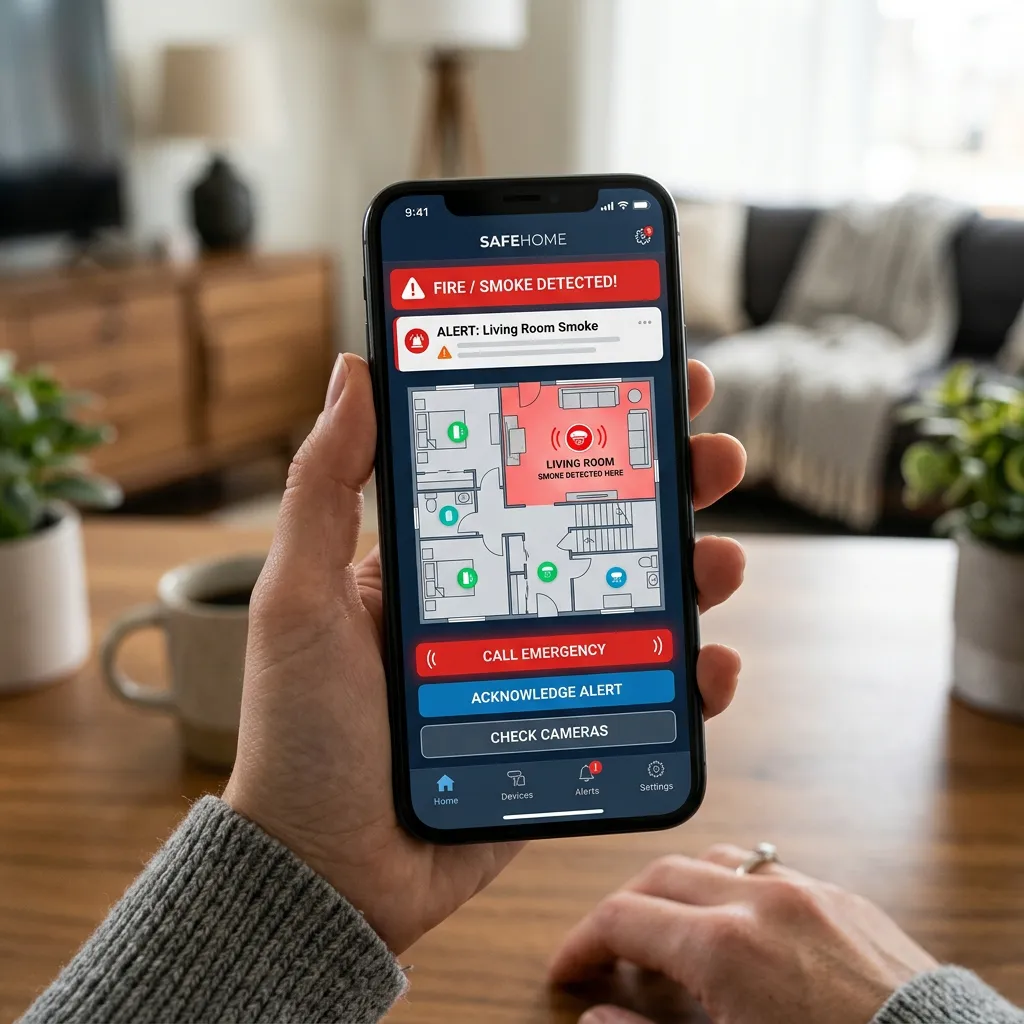
Our advisor's take
For most American homes, monitored smoke and CO detection is the single highest-value safety feature you can add. Burglary is what people worry about. Fire and CO are what statistically cause more home deaths each year. The monitoring fee for these detectors is often the most important line item in the entire system.
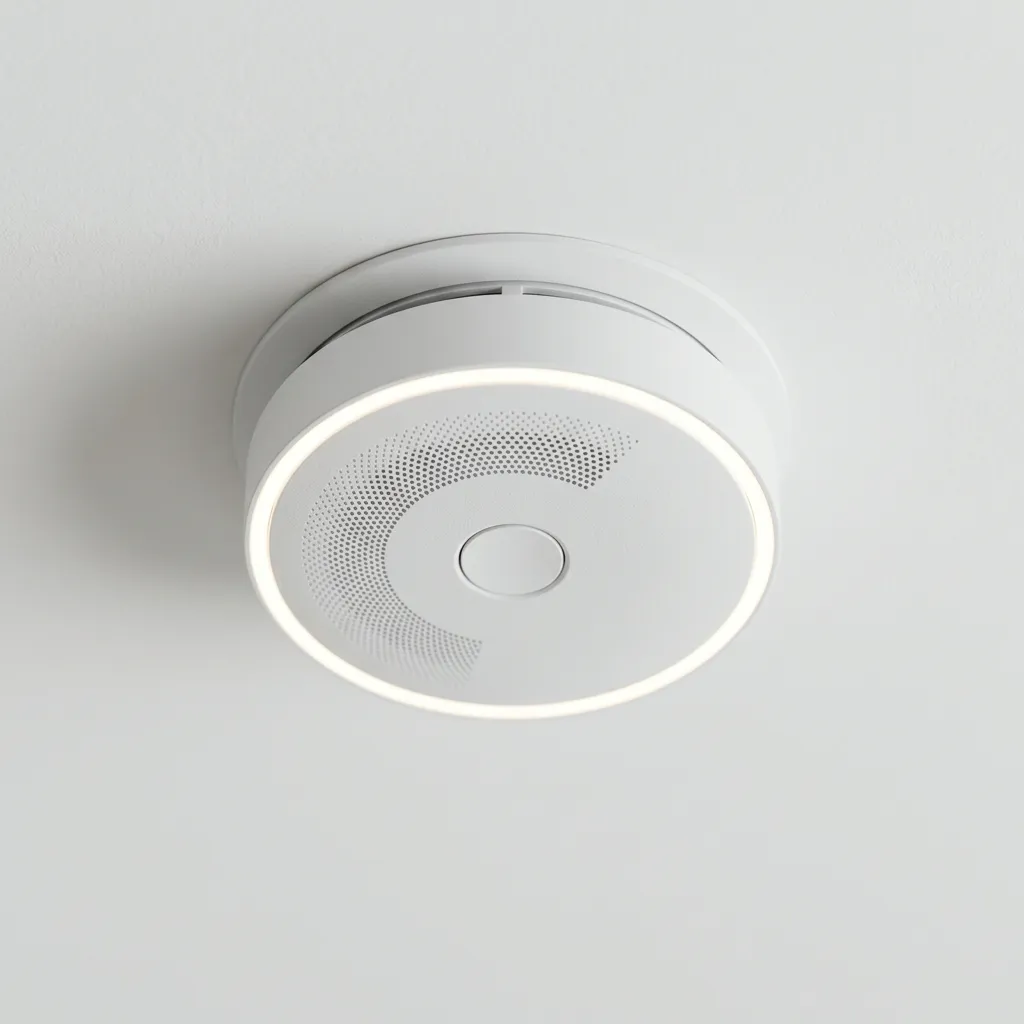
Smoke Detection: How Modern Detectors Work
Modern smoke detectors use one or two sensor types depending on the model. Each catches a different kind of fire.
Photoelectric sensors. Best for slow, smoldering fires (couch fires, electrical fires inside walls). These fires produce a lot of smoke before they produce flame, and photoelectric sensors catch them faster.
Ionization sensors. Best for fast, flaming fires (kitchen grease fires, paper, certain fabrics). These fires produce small particles that ionization sensors detect quickly.
Dual-sensor detectors. Combine both technologies in a single unit. This is the configuration the National Fire Protection Association recommends for residential homes because real fires often start as one type and develop into the other. A modern monitored fire alarm system typically uses dual-sensor detectors throughout the home for the broadest possible coverage.
What modern monitored detectors include: 10-year sealed lithium batteries (no annual battery changes), interconnected wireless networks (when one alarm sounds, every alarm in the home sounds), low-battery alerts to your phone, and quick-silence buttons for kitchen false alarms. Many also combine smoke and CO detection in a single device.
Carbon Monoxide: The Silent Killer
Carbon monoxide is colorless. Odorless. Tasteless. Humans cannot detect it without a device. By the time symptoms appear (headache, dizziness, confusion), a person may already be too impaired to act on them. At very high concentrations, CO can cause unconsciousness and death.
CO is produced any time a fuel burns incompletely. Common sources in American homes include gas furnaces, water heaters, fireplaces, gas stoves, attached garages where a car has been running, and portable generators used too close to the house. Most cases happen in the colder months, when homes are sealed up and heating systems run continuously.
How Modern CO Detectors Work
Most home CO detectors use electrochemical sensors, which detect CO molecules in the air and trigger an alarm when concentrations reach dangerous levels. The best detectors check the air continuously and provide both an audible alarm and a digital display showing current CO levels. Monitored CO detectors add the same advantage as monitored smoke detectors: the monitoring center is alerted automatically and dispatches the fire department or paramedics.
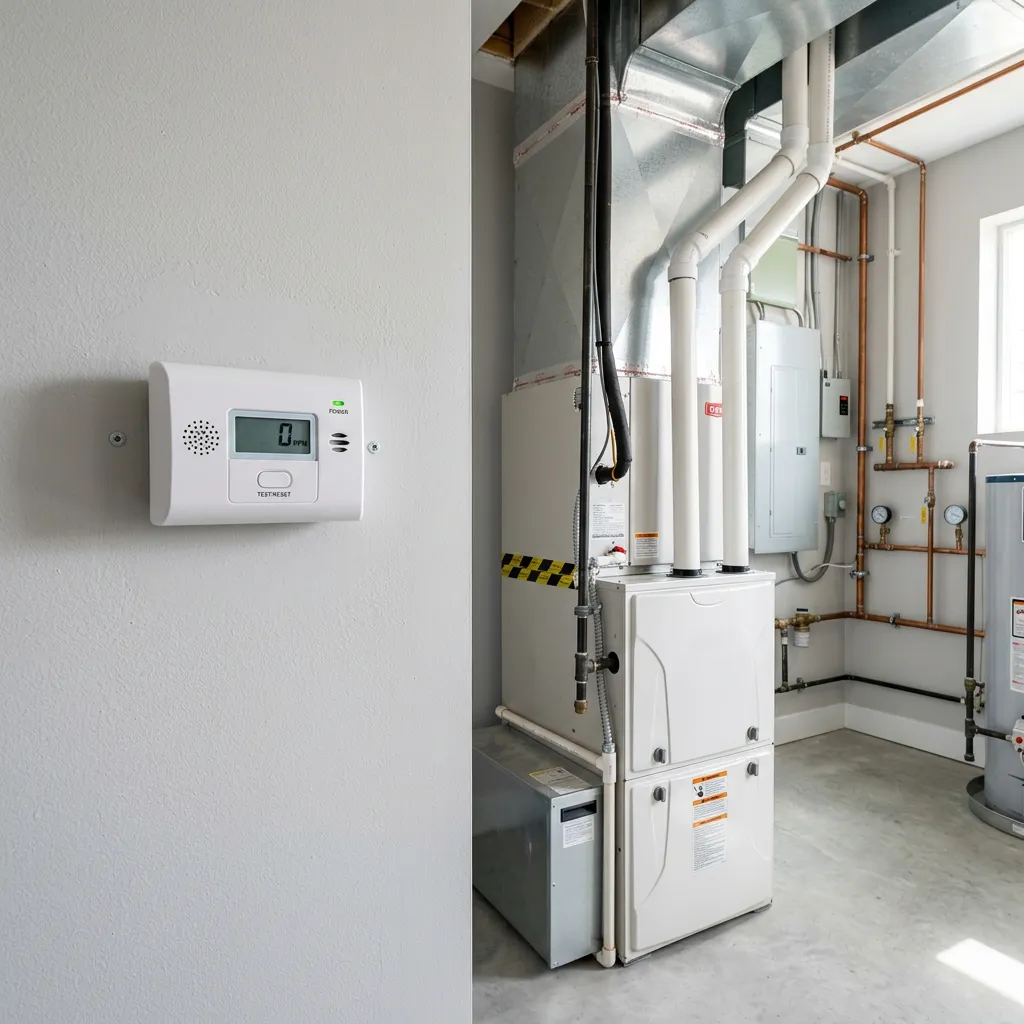
Where to Place Smoke and CO Detectors
Placement follows building codes and National Fire Protection Association guidelines. Some are required by code in many areas. All are recommended by safety organizations and most building inspectors.
| Detector Type | Where It Belongs |
|---|---|
| Smoke detectors | Every level of the home. Inside each bedroom. Outside each sleeping area. Near (but not directly over) the kitchen. In the basement near the bottom of the stairs. |
| CO detectors | Every level of the home. Outside each sleeping area. Near attached garages. Near gas furnaces, water heaters, and fireplaces. CO mixes evenly with air, so placement height is less important than positioning away from cooking appliances, humid areas, and direct air flow. Follow the manufacturer's installation instructions for each specific detector. |
| Combination detectors | Same locations as separate units, but with one device handling both. Best in bedrooms, hallways outside bedrooms, and the main living level. |
Our advisor's take
Most older American homes are under-protected. Many have a single smoke alarm in the hallway and no CO detection at all. A modern monitored system typically includes 4 to 8 detectors covering every level, every sleeping area, and key risk zones. We walk through your home during the consultation and recommend an exact placement plan based on your layout and any gas-burning appliances.
Combination Detectors vs Separate Units
Many homeowners ask whether to use combination smoke + CO detectors or separate units. Both work. Each has trade-offs.
Combination units cover both threats in one device, simplifying installation and reducing the number of detectors on your ceilings. Separate units let you place each type exactly where it's most effective (smoke detectors high on ceilings, CO detectors more flexibly). For most homes, a mix works well: combination units in bedrooms and main hallways, dedicated CO detectors near furnaces and attached garages. Your advisor recommends the right mix during installation.
Why Choose Home Secure Connect
We help you get the right smoke and CO detectors, placed correctly, and connected to 24/7 monitoring that dispatches help automatically.
Get a Free QuoteCode-Compliant Coverage
Local fire codes and NFPA guidelines require specific placement of smoke and CO detectors. Our advisors walk through your home and recommend coverage that meets code while addressing your home's specific risk zones.
Automatic Fire Department Dispatch
Every detector integrates with the 24/7 monitoring center. When smoke or CO is detected, the fire department is dispatched automatically, even if no one in the home can call for help.
Detector Lifecycle Management
Detectors need replacement every 7 to 10 years. Batteries need replacement. We track all of this for you and arrange service before any device reaches end of life.
Across All 50 States
We help homeowners across the country find the right monitored setup, with installers familiar with local fire codes, jurisdiction-specific requirements, and homeowners insurance qualifications.
Frequently Asked Questions
Standalone alarms wake you up when you're home and awake. Monitored detectors do that, plus they automatically call the fire department, even if no one in the house is awake or able to respond. For fires that start during sleep or when you're away from home, the dispatch happens immediately rather than waiting for someone to notice and call 911. For most homeowners, this difference is significant.
Most American homes need a detector on every level, inside every bedroom, outside each sleeping area, and near major risk zones (kitchen, basement, furnace, attached garage). For an average single-family home, that typically works out to 4 to 8 detectors. Larger homes need more. Apartments and small homes need fewer. We walk through your specific layout during the free consultation and recommend an exact plan.
CO detectors should be placed on every level of the home and outside each sleeping area, with special attention to rooms near attached garages, gas furnaces, water heaters, and fireplaces. CO mixes evenly with air, so placement height is less important than positioning. Avoid placing detectors within 15 feet of cooking appliances or in extremely humid areas like bathrooms (false alarms are more likely there), and avoid direct air flow from vents or fans. Follow the placement instructions that come with each specific detector.
Photoelectric sensors detect slow, smoldering fires better (like furniture or electrical fires that produce smoke before flame). Ionization sensors detect fast, flaming fires better (like kitchen grease fires or paper). Each catches what the other might miss. The National Fire Protection Association recommends dual-sensor detectors that include both technologies, especially for residential homes.
Yes. Monitored smoke and CO detectors have their own battery backup, typically a 10-year sealed lithium battery that doesn't need annual replacement. The security panel also has battery backup, and many systems include cellular backup so signals reach the monitoring center even if internet is down. Your protection stays active when you might need it most.
Smoke detectors should be replaced every 10 years, and CO detectors typically every 7 to 10 years depending on the model. Modern detectors include an end-of-life signal that alerts you when replacement is due. Our advisors track this for you and arrange replacement as part of your ongoing service.
Add Monitored Smoke and CO Protection to Your Home
Talk to a real advisor about the right smoke and CO detection setup for your home. We walk through your layout, recommend coverage that meets code, and integrate everything with the 24/7 monitoring center. No pressure. No fees.
Or call (855) 248-8052. Mon to Sun, 10am to 8pm.