Smart Plugs and Lighting Automation: Make Your Home Look Occupied
Lights that turn on when you arrive home. A house that looks lived-in when you're away on vacation. Coffee machines that brew on schedule. Holiday lights that handle themselves. And when smoke is detected, every light in the house flashes on to help everyone find their way out.
A dark house is an empty house — to anyone watching.
Burglars don't break into random homes. They watch. A house with the same lights coming on at 7pm and off at 11pm every single day, week after week, isn't a real home. It's a timer. And a timer means nobody's there.
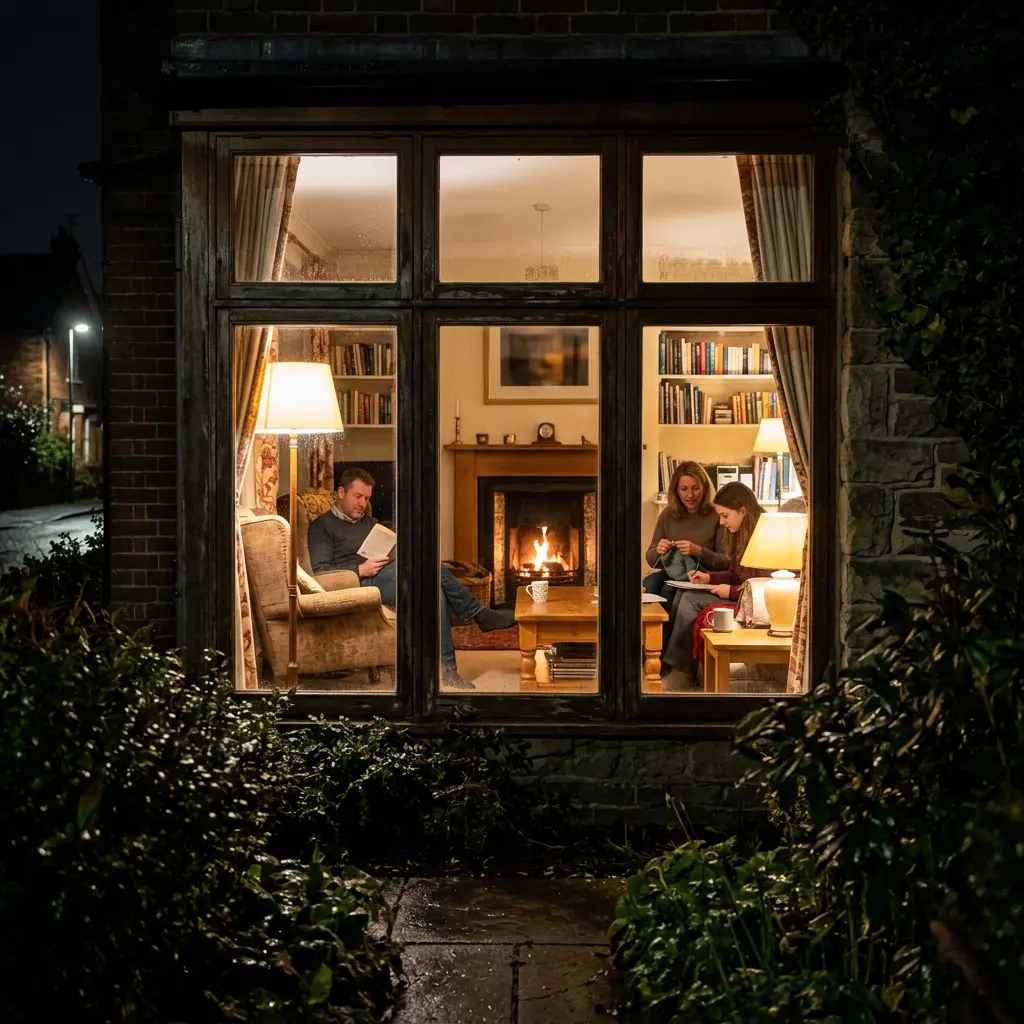
Smart plugs and lighting automation solve this in a way old-school light timers never could. Lights turn on and off at random intervals across different rooms. Outdoor lights respond to sunset. The bedroom lamp comes on at 10pm one night and 10:23pm the next. To anyone watching, the home looks lived-in. The result: a smart plug to make house look occupied while you're away, all without you doing anything.
But that's just the security side. The real value of smart lighting is that it changes how you actually use your home every day.
Three Ways to Build Smart Lighting Automation
Smart lighting automation comes in three main forms. The right mix depends on what you want to control.
Smart Plugs (Indoor)
Plug between your wall outlet and any lamp or appliance. Controls on/off remotely or on schedule. Best for lamps, coffee makers, fans, TVs, and anything else with a standard plug.
Smart Plugs (Outdoor)
Weatherproof versions rated to withstand rain and outdoor conditions. Best for string lights, landscape lighting, holiday displays, garden fountains, and outdoor appliances. The best outdoor smart plug models include dual outlets and weather ratings of IP64 or higher.
Smart Switches
Replace the wall switch itself, wired into the electrical box. Permanent solution for overhead lighting, ceiling fans, and any fixture controlled by a wall switch. Requires professional installation.
Vacation Mode: The Security Feature That Actually Matters
If there's one feature in this category that justifies the cost on its own, it's modern vacation mode. Done right, it's the closest thing to having someone actually live in the home while you're away.
How Vacation Mode Works
Traditional light timers turn lights on at a set time and off at another set time. Every day. The same way. A burglar watching the property for a few days quickly figures out the pattern. The 'timer look' is so obvious that some neighborhood watch programs specifically warn against it.
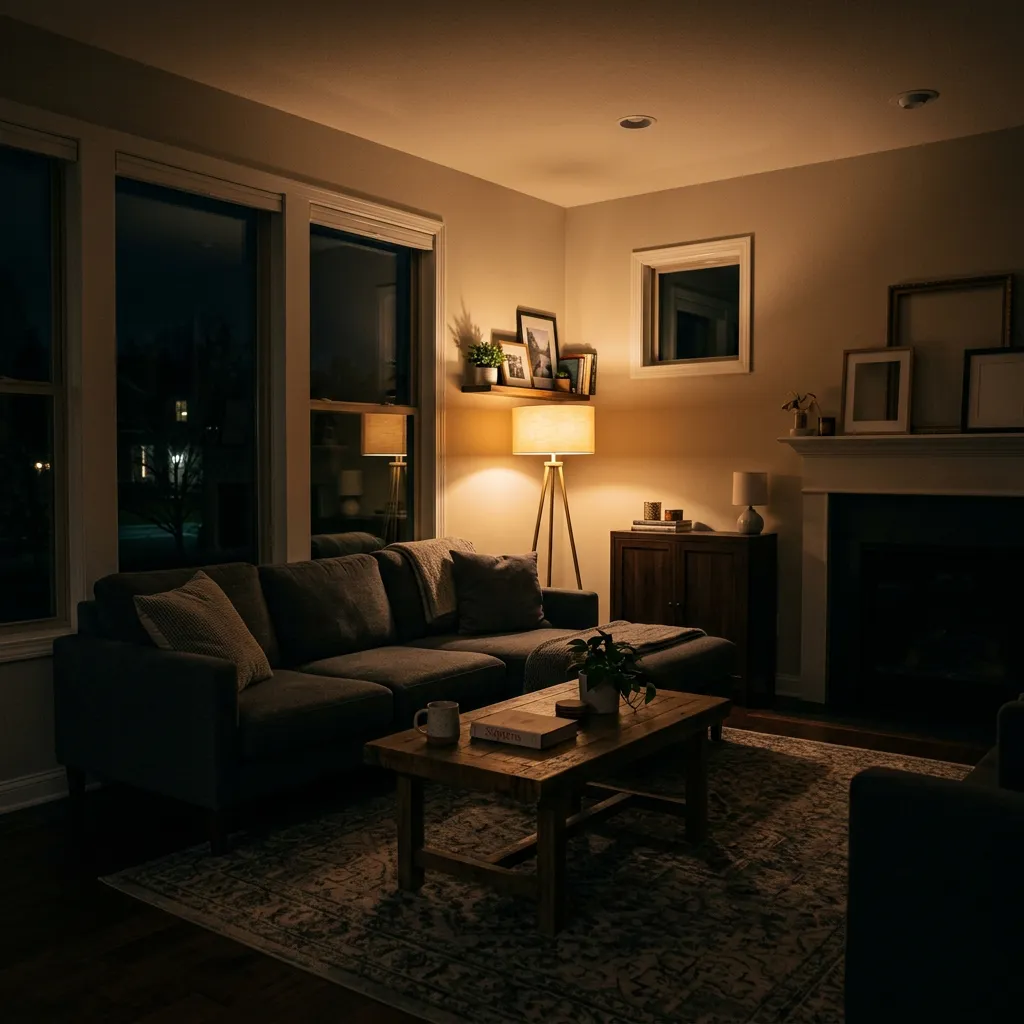
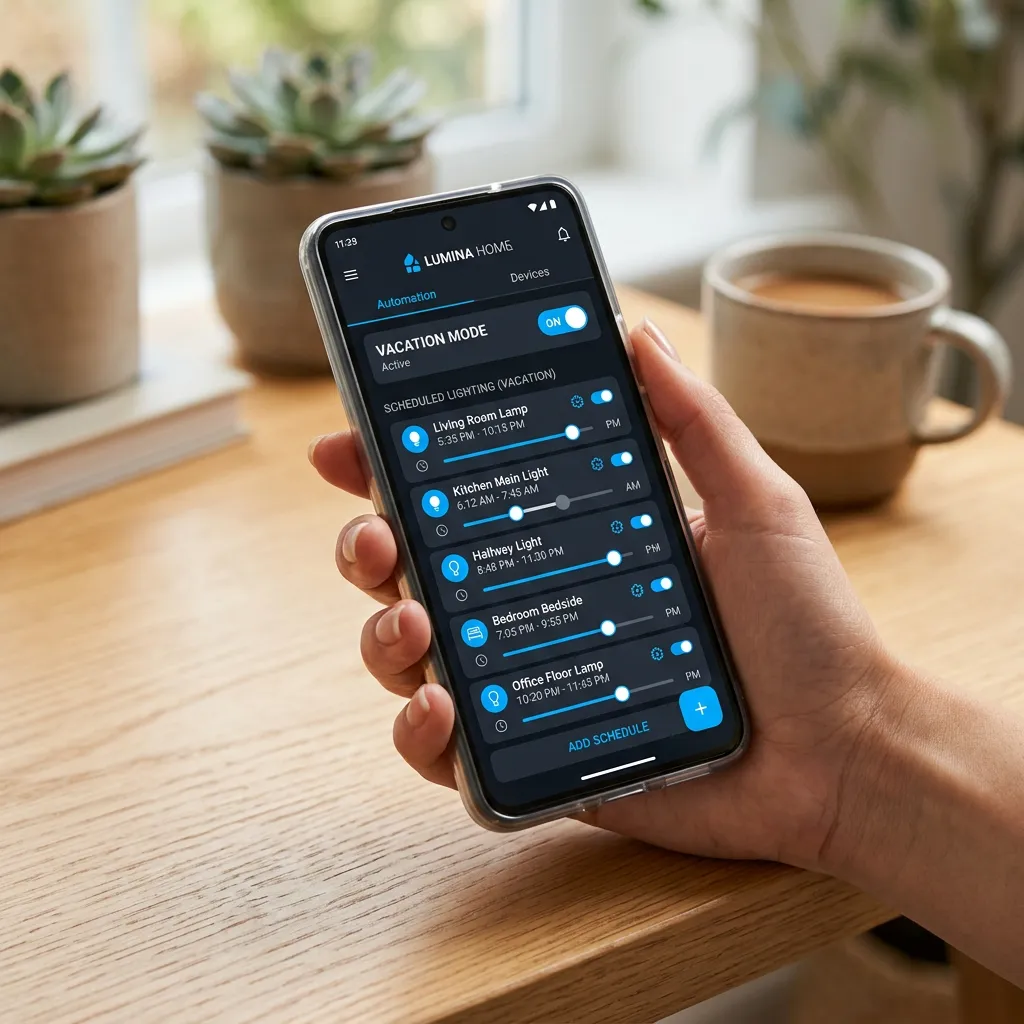
Modern vacation mode is different. The system turns lights on and off at random intervals throughout the evening. A bedroom lamp might come on at 9:47pm one night and 10:19pm the next. The kitchen light might turn off at 11:02pm one night and 11:38pm the next. Different rooms light up at different times. Some smart systems even sync the patterns to typical occupant behavior — kitchen and living room lights early evening, bedrooms later, then everything off overnight.
Why this matters more than people realize:
The most common time for residential burglaries is daytime when people are at work. The second most common is when families are away on vacation. Burglars often case homes for a few days first to confirm no one is home. Vacation mode breaks that surveillance pattern. To anyone watching, the home looks like it has a real occupant doing real things.
Even Better When Integrated
Standalone smart plugs offer vacation mode that works on their own. But when smart plugs are connected to your security system, the feature gets smarter. Arming your system in 'away' mode automatically activates vacation mode across all smart plugs and switches. Disarming it deactivates them. No separate app. No remembering to turn vacation mode on before you leave.
Emergency Response: When Lights Become Part of the Safety System
This is where smart lighting integrated with a security system goes beyond what standalone smart plugs can offer.
When the smoke alarm triggers
lights throughout the home can be configured to flash on, helping everyone find their way out and signaling the emergency visually from outside the home for arriving firefighters.
When a door opens after dark
the hallway and entryway lights can turn on automatically — useful for kids coming home late, deliveries, or unexpected after-dark entries.
When the freeze sensor warns
lights near at-risk pipe areas (basements, garages, attics) can turn on so you can quickly check the situation remotely through your cameras.
These integrations only work when smart plugs and switches are part of one connected system. Standalone products from different vendors can't coordinate this way.
What Else You Can Automate
Vacation mode is the security headliner, but the everyday smart lighting automation is what most homeowners actually use most often. The common automations:
Outdoor lights at sunset.
Pathway lights, porch lights, and landscape lights turn on automatically when the sun sets, off when it rises. No more dark front walkway. No more wasted electricity on lights running at noon.
Holiday lights, handled.
A smart plug for holiday lights turns the display on at sunset and off at midnight, automatically. No more unplugging cords or walking the yard to switch displays off.
Coffee, fans, and appliances on schedule.
Coffee maker brews at 6:25am so the pot is ready when you wake. Bedroom fan turns off at 7am. Heating pad shuts off after 30 minutes for safety.
Lights on when you arrive.
Geofencing on your phone triggers entryway lights to turn on as you approach the house. No fumbling for switches in the dark.
Outdoor motion triggers interior lights.
When the outdoor smart deterrence camera or motion sensor detects activity after dark, interior lights in the living room or hallway can turn on automatically. The intruder sees an active home rather than a dark, empty one — and you get an immediate visual signal of unusual activity, even before you check your phone.
Energy savings on phantom loads.
Many electronics draw power even when off — TVs in standby, phone chargers, gaming consoles. Do smart plugs save electricity? Yes. Energy monitoring plugs identify the worst phantom-load offenders and shut them off automatically. Modest but real savings over a year.
Smart Plug vs Smart Switch vs Smart Bulb: Which Is Right for You?
Most homeowners shopping for smart lighting hit this exact question early on. Here's the practical answer.
Use a Smart Plug when
You want to control a specific lamp or appliance with a standard plug. No wiring required. Move it from outlet to outlet as needed. Best for lamps, coffee makers, fans, holiday lights, and any portable device.
Use a Smart Switch when
You want to control overhead lighting, ceiling fans, or any fixture wired to a wall switch. Permanent solution. Works with any standard bulb. Requires professional installation but is the right answer for permanent lighting.
Use a Smart Bulb when
You want to change colors, set custom color temperatures, or dim without buying a special dimmer plug. More expensive per light, but more visual control. Common for accent lighting, kid's rooms, or specific design effects.
Our advisor's take
For most homes, the right mix is a few smart plugs in key rooms (table lamps, holiday lights, the coffee maker), one or two smart switches for the most-used overhead lights (kitchen, front hallway), and smart bulbs only where color or special effects matter. We walk through your specific home during the free consultation and recommend the right mix without overspending.
Right Mix for Your Home
Not every room needs a smart device. Our advisors walk through your home and design smart lighting automation only where it adds real value. No over-buying.
Professional Switch Installation
Smart switches require wiring into electrical boxes. Some older homes don't have a neutral wire, which not every switch supports. Our installers handle this and recommend models that work with your wiring.
Real Security Integration
Vacation mode that triggers when you arm 'away' mode. Lights that respond to smoke alarms. Hallway lights that activate when doors open after dark. These integrations come built in.
Across All 50 States
Looking for smart switch installer near me? We help homeowners across the country find the right setup and the right installer for their specific wiring situation.
Frequently Asked Questions
Vacation mode automatically turns connected lights and devices on and off at random intervals to simulate someone living in the home. Unlike old-school timers (which turn things on and off at the exact same time every day, creating an obvious pattern), modern vacation mode varies the timing across different rooms and different evenings. The result looks like a real occupant doing real things, which significantly reduces the appeal of the home to anyone watching it.
Use smart plugs for lamps, coffee makers, holiday lights, and anything else with a standard plug — you control on/off and scheduling without changing the bulb. Use smart bulbs only if you specifically want to change colors, adjust color temperature, or dim without buying a special dimmer plug. For most homeowners, smart plugs handle 80 percent of what they actually want, at lower cost per fixture. Smart bulbs make sense for accent lighting, kid's rooms, or specific design effects.
For most households, yes — modestly. The biggest savings come from cutting phantom loads (devices that draw power even when off, like TVs in standby, phone chargers, gaming consoles). Energy monitoring smart plugs let you see which devices waste the most and shut them off automatically. Savings vary by household, but most American homes have enough phantom load that smart plugs pay back over a couple of years. The bigger value for most homeowners is convenience and security, with energy savings as a bonus.
Some can, most can't. Most smart plugs need Wi-Fi for remote control, schedules, and app management. A few models use Bluetooth instead, which works locally but limits remote access. Smart plugs that connect through a Z-Wave or Zigbee hub (instead of Wi-Fi) work even if your Wi-Fi goes down, as long as the hub stays powered. For homes with unreliable Wi-Fi, ask your advisor about hub-based options.
Some smart switches require a neutral wire (most common in homes built before about 1980 to 1990 don't have one at every switch box). Other smart switches are specifically designed to work without a neutral wire — typically by drawing a tiny amount of power through the bulb. Both options are available. Our installers check your wiring during the consultation and recommend models that work with what you have, avoiding the need for expensive electrical rewiring.
Smart switch installation cost depends on the number of switches, the type of fixtures they control, your home's wiring (with or without neutral wire), and any integration with your security system. A single smart switch swap is straightforward and quick. Multiple switches, three-way switches (where two switches control the same light), or wiring upgrades take longer. We provide specific costs during the free consultation based on your exact setup.
The best outdoor smart plug has three things: a weather rating of IP64 or higher (IP65 is even better), a wide operating temperature range, and dual independently-controlled outlets. IP64 means the plug is protected against dust and water splashes from any direction. IP65-rated plugs handle low-pressure water jets and heavier rain. Most professional-grade outdoor smart plugs operate reliably from below freezing temperatures up to about 122 degrees Fahrenheit, covering virtually all US climates year-round. They are not designed for submersion, so mount them at standard outlet height off the ground. Our advisors recommend specific outdoor models during the free consultation based on your exact use case (string lights, holiday displays, landscape lighting, etc.).
Make Your Home Look Lived-In, Even When You're Not There
Talk to a real advisor about the right smart plugs, switches, and lighting automation for your home. We walk through your specific rooms, recommend the right mix, handle professional installation, and integrate everything with your security system. No pressure. No fees.
Or call (855) 248-8052. Mon to Sun, 10am to 8pm.