Quick Answer
In one sentence: Renters can secure an apartment effectively using wireless, removable, adhesive-mounted equipment that leaves no holes, which in most cases does not trigger the modification clauses in a standard lease.
The longer answer: The renter's problem isn't finding security equipment. It's finding equipment that protects the apartment without creating a lease dispute or a deduction from the deposit. The workable approach has three parts: check the specific lease language before you buy anything, choose damage-free equipment that removes cleanly, and document the unit's condition with photos at move-in and move-out. This guide covers all three, including the exact wording to use if you do need to ask your landlord for permission.
Key Takeaways
- Most wireless, removable security equipment does not trigger standard lease modification clauses because nothing is permanently altered.
- Check three specific lease sections before buying: alterations, locks, and fixtures.
- Adhesive sensors, tension-mounted door bars, and plug-in cameras need no landlord approval in most rentals.
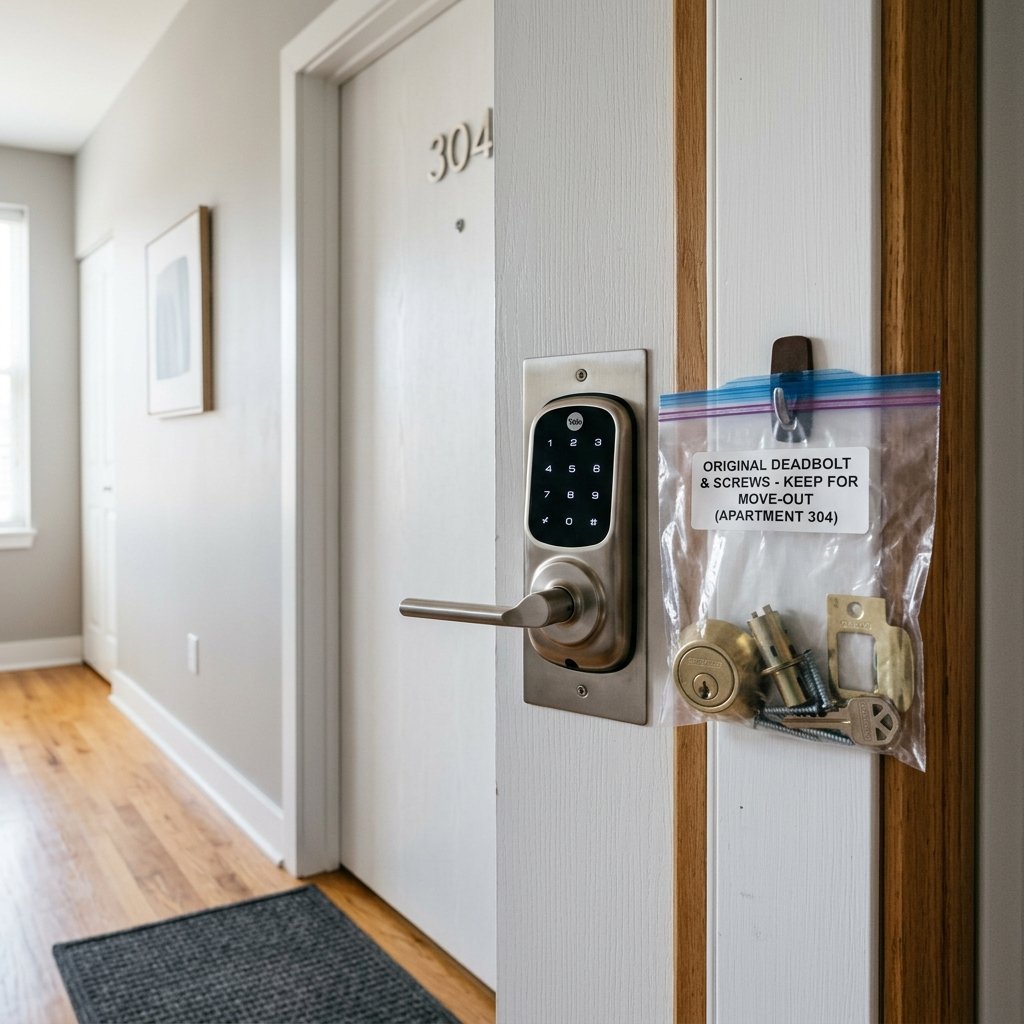
- If you replace a deadbolt with a smart lock, keep the original hardware and reinstall it before you move out.
- Photograph every mounting surface at move-in and after removal. Several states now formalize photo documentation in deposit disputes.
Renting changes the security question. It stops being "what's the best system" and becomes "what can I install that actually protects this place, and that I can take with me without losing a chunk of my deposit?" Most security guides skip that second half entirely and just list products.
This guide handles the part that actually creates problems: the lease. We'll cover what to check before you buy, what you can install without asking anyone, how to word a permission request if you need one, and what to do at move-out so nothing gets deducted. If you're weighing the equipment side too, our comparison of wireless and wired systems covers why wireless is almost always the renter's answer.
One important note. Lease terms and security deposit rules are set by state and local law, and they change. Deposit caps, deduction rules, and documentation requirements differ significantly across states. Nothing here is legal advice. Read your actual lease, and check your state or city housing authority for the rules that apply to you.
First, Read These Three Lines in Your Lease
Before buying anything, find these three sections. They decide almost everything about what you can install.
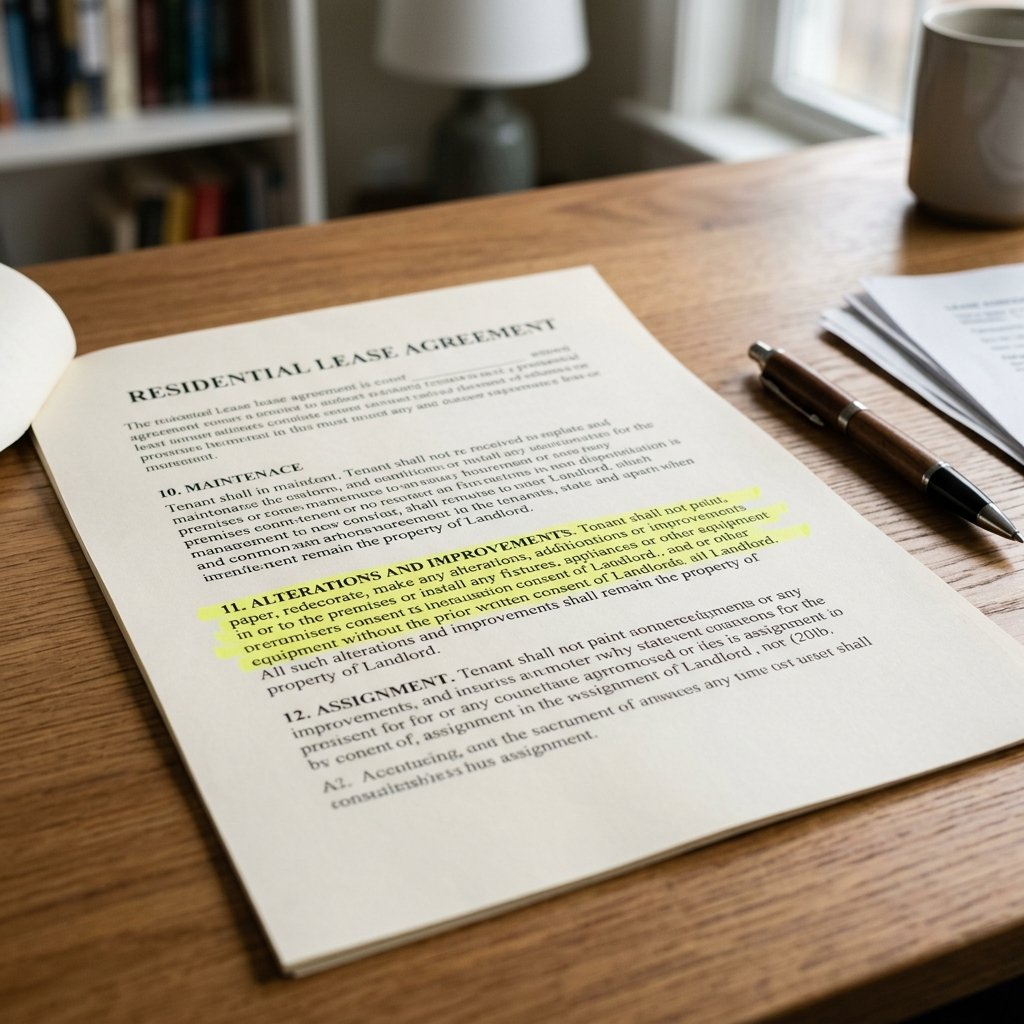
1. The alterations or modifications clause
This is the one that matters most. It typically prohibits permanent changes to the unit: drilling, mounting hardware to walls, painting, or altering fixtures. Read it carefully for the word "permanent" or "structural." Renter guidance from security publications consistently notes that temporary, removable equipment generally falls outside these clauses precisely because nothing is permanently altered. If the clause bans any attachment at all, including adhesive, you're limited to freestanding and plug-in devices.
2. The locks clause
Many leases specifically address changing locks, and some require the landlord to keep a working key for emergency access. This is the clause that governs whether you can swap a deadbolt for a smart lock. If your lease requires landlord key access, a smart lock with a physical key backup or a keypad code shared with management is usually the workable path.
3. The fixtures clause
This determines what becomes the landlord's property when you leave. Anything considered "affixed" to the unit may legally stay behind. It's worth knowing before you install something expensive that you intend to take with you.
If any of the three is ambiguous, that's your signal to ask rather than assume. The script in the next-but-one section handles that.
What You Can Install Without Asking Anyone
In most standard rentals, the following require no landlord approval because they leave no trace. Coverage advice below reflects general renter security guidance, including recommendations that renters prioritize wireless, removable devices.
| Equipment | How it mounts | Why it's renter-safe |
|---|---|---|
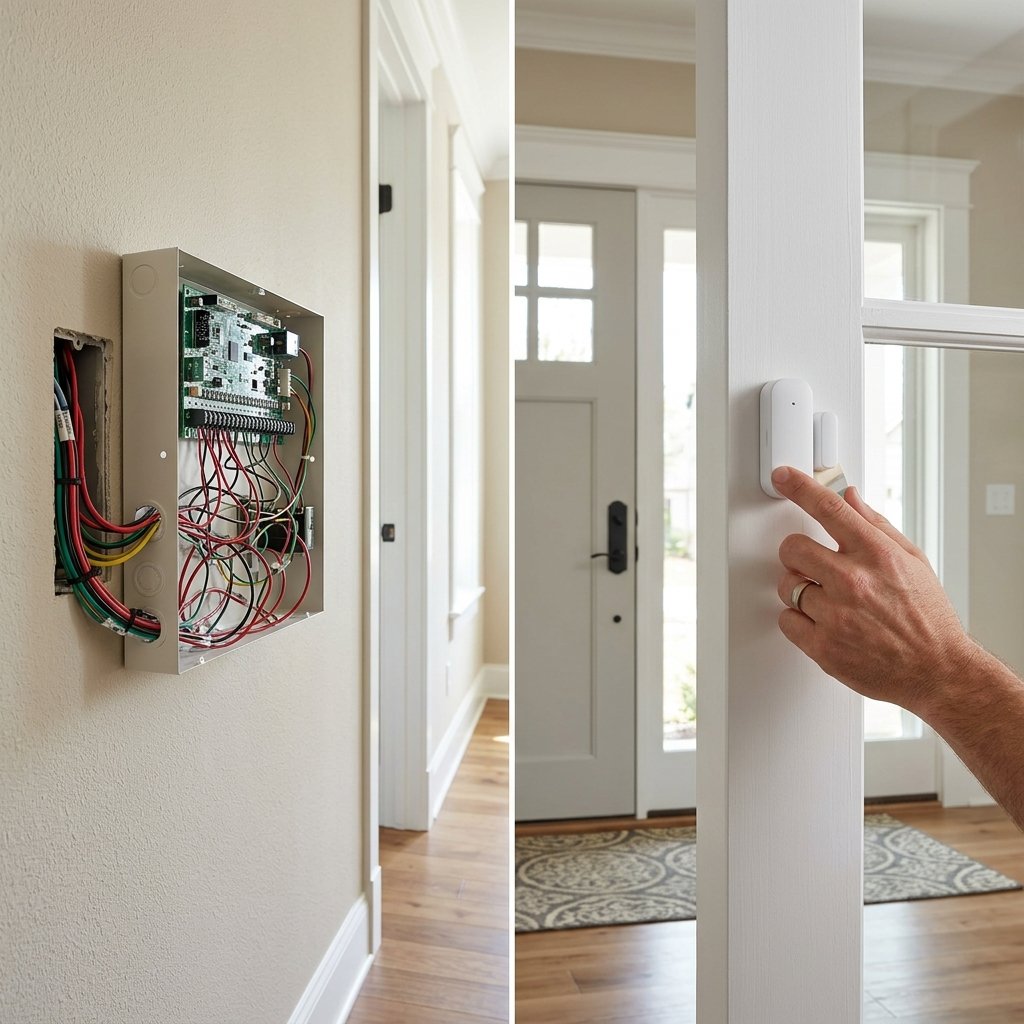
| Door and window sensors | Adhesive strips | Peel off at move-out, no holes |
| Motion sensor | Adhesive or shelf-placed | Often needs no mounting at all |
| Indoor camera | Freestanding on a shelf | Nothing attached to the structure |
| Sliding door bar | Tension fit in the track | Removes in seconds, no tools |
| Door reinforcement plate | Uses existing screw holes | Adds no new holes to the frame |
| Security window film | Applied to the glass | Removable, check lease wording first |
| Plug-in smart lighting | Existing outlets | Simulates occupancy, fully portable |
| Portable door lock or jammer | Braces against the door | No installation whatsoever |
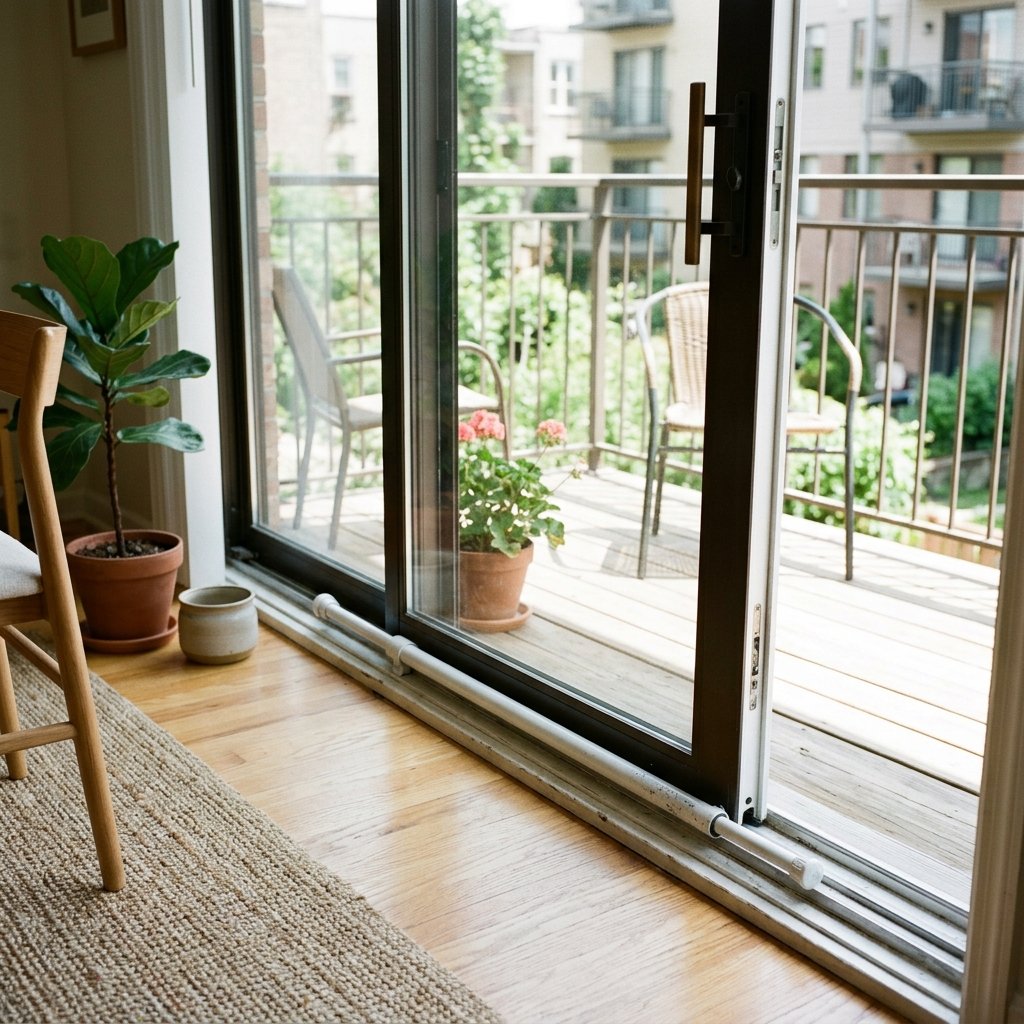
One placement note worth knowing: renter security guides consistently report that apartments on ground and lower floors are the more common targets, so entry doors, patio sliders, and accessible windows deserve coverage first. Our guide to door and window sensors covers placement in more detail.
Not sure what your lease actually allows?
Our advisors help renters put together damage-free setups that fit the lease and move with them. Free consultation, no pressure.
Call (855) 248-8052 or request a free quote online.How to Ask Your Landlord (Word for Word)
If you want a camera at the entry, a smart lock, or anything that touches a wall, ask in writing. Written approval is what protects you later. Most landlords say yes when the request is specific and addresses their actual concerns, which are damage and access.
Here's wording you can adapt. Send it by email so there's a record.
Sample request you can copy
Subject: Request to install removable security equipment at [address]
Hi [name],
I'd like to add some security equipment to the unit and want to confirm it's fine with you first.
What I'm planning to install: [list each item and where it goes].
How it mounts: all of it is wireless and attaches with adhesive strips, so there's no drilling and no holes. Everything comes off cleanly when I move out.
On the lock: I'd keep the original deadbolt and reinstall it before move-out, and I'm happy to provide you an access code or a key for emergencies. [Include only if requesting a lock change.]
I'll photograph each surface before and after, and I'll cover any repair if removal leaves a mark.
Could you confirm by reply that this is approved? Happy to adjust anything that's a concern.
Thanks,
[name]
Why this works: it names the specific items, removes the damage concern up front, solves the access problem before it's raised, and asks for a written yes. That last part matters most. A verbal approval from a property manager who leaves the company is worth very little at move-out.
Four Renter Situations and What Usually Works
Renting covers a lot of different living arrangements. Here are four common ones and the approach that tends to fit.
Ground-floor apartment with a patio slider
This is the highest-priority setup. A tension bar in the slider track plus a sensor on the slider itself covers the most likely entry point, and neither requires permission or tools.
Shared house with roommates
Entry sensors and a shared alarm work well. Cameras get complicated fast, and the privacy section below covers why. Agree on camera placement with everyone before anything goes up.
Short lease or frequent moves
Prioritize equipment that packs into a box in ten minutes. Skip anything requiring configuration you'd have to redo. Contract-free monitoring matters more here than equipment features.
Building with a doorman or controlled entry
Your risk profile shifts from forced entry toward package theft and unit-door security. A door reinforcement plate and package handling matter more than perimeter sensors. Our guide to preventing package theft covers the delivery side.
Cameras, Roommates, and Privacy
This part gets skipped in most renter security articles, and it shouldn't. Camera placement in a rental carries obligations that don't apply the same way in an owned single-family home.
Renter security guidance is consistent on the principle: avoid recording roommates, neighbors, or shared areas without clear consent. A camera pointed at your own entry from inside your unit is straightforward. A camera in a shared hallway, a shared living room, or aimed at a neighbor's door is not, and in many places it raises legal issues on top of the obvious interpersonal ones.
Practical rules that keep you clear
- Point cameras at your own entry and your own space only
- Never place a camera where anyone has a reasonable expectation of privacy
- Tell roommates about any camera before installing it, and agree on placement
- Check whether your building or state has rules on audio recording, which is often treated more strictly than video
- In shared hallways, assume you need building management approval
Protecting Your Deposit at Move-Out
Security deposits are among the most frequently disputed parts of renting. Deposit amounts commonly run from one to one and a half months' rent, though several states cap them lower, and rules on deductions and documentation vary widely by state. The good news is that a damage-free security setup is easy to defend if you document it.
Move-out checklist for security equipment
- Photograph every mounting surface before you remove anything, with the equipment still in place.
- Remove adhesive slowly. Warming the strip with a hair dryer on low helps it release without lifting paint.
- Reinstall the original deadbolt if you swapped it, and keep the smart lock. This is the single most common renter oversight.
- Photograph each surface again after removal, in good light, from the same angle as the first photo.
- Patch and touch up anything that did mark, before the walkthrough rather than after a deduction.
- Keep your written landlord approval with your move-out records.
- Request a walkthrough with the landlord present if your state allows it, and bring the photos.
Photo documentation is worth emphasizing. Some states have moved toward formalizing before-and-after photo evidence in deposit disputes, and even where it isn't required, dated photos from both ends of the tenancy are the most effective thing a renter can bring to a disagreement. Take them whether or not your state mandates it.
Frequently Asked Questions
Can renters install a security system without landlord permission?
In most cases yes, provided the equipment is wireless and removable. Standard lease clauses restrict permanent alterations, and adhesive-mounted or freestanding devices generally don't qualify as permanent. Read your specific lease, and ask in writing if the wording is unclear.
Will a security system affect my security deposit?
It shouldn't, if nothing is drilled and everything removes cleanly. Deposits cover unpaid rent and damage beyond normal wear and tear. Photograph surfaces before and after removal so you can document that no damage occurred.
Can I put a camera outside my apartment door?
That depends on your building. A hallway is usually shared space, so it typically needs building management approval. A camera inside your unit facing your own door avoids the issue entirely and is the safer default.
Can I replace my apartment's deadbolt with a smart lock?
Often yes, but check the locks clause in your lease first. Many landlords require continued key access for emergencies. Keep the original deadbolt and reinstall it before you move out, and expect to provide a code or key.
What's the best security setup for a ground-floor apartment?
Start with the patio slider and any accessible windows, since lower-floor units are more common targets. A tension bar in the slider track plus sensors on the slider and windows covers the main risk without any installation.
Do I need professional monitoring as a renter?
Not necessarily. Self-monitoring works if you reliably see and act on alerts. Professional monitoring makes more sense if you're often asleep, traveling, or unable to respond, since it dispatches help without you. Contract-free plans suit renters best.
Can I take my security system with me when I move?
Yes, that's a main advantage of wireless equipment for renters. Most systems uninstall in under an hour and reinstall at the new address. Confirm any monitoring plan transfers to a new address before you sign up.
Can my landlord say no to a security system?
They can restrict permanent modifications, and lease terms vary. Refusal of entirely removable equipment is less common, especially when you address damage and access concerns in writing. If you get a no, freestanding and plug-in options remain available.
Should I tell my roommates about a camera?
Yes, always, and before installing it. Recording people without their knowledge creates legal exposure in many places and serious interpersonal problems everywhere. Agree on placement together, and keep cameras out of shared living areas.
Does renters insurance replace a security system?
No, they solve different problems. Renters insurance may reimburse you for stolen property after the fact. A security system aims to prevent the break-in and alert someone while it's happening. Some insurers offer a discount for monitored systems, so it's worth asking yours.
Related Reading
- Wireless vs Wired Home Security Systems: Which Is Right for You?
- DIY vs Professional Home Security Installation
- How to Prevent Package Theft During the Holidays
Explore our services:
- Door, Window & Motion Sensors
- Security Cameras & Doorbell Cameras
- Smart Locks & Keyless Entry
- Home Security Overview
Get a Second Opinion, Free
Renting shouldn't mean going without security. It just means choosing equipment that respects the lease and comes with you.
Home Secure Connect is an independent home security advisor. We help renters across the USA build damage-free setups from our trusted provider partners, including contract-free monitoring that moves with you. Free consultation. No obligation. No pressure.
Call (855) 248-8052 or Request a Free QuoteAvailable Mon to Fri, 10am to 8pm ET.